
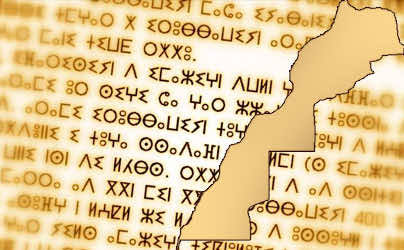
Amazigh identity, language, and cultural expression are part of Morocco’s diverse social history. This overview introduces language status and commonly named varieties without treating cultural regions as fixed borders or communities as uniform.
Last reviewed:
Terms and official status
Amazigh is the preferred contemporary term in much institutional and community-facing English. “Tamazight” can refer to the language broadly or to a specific variety depending on context. Older sources may use “Berber”; when quoting or describing a historical source, explain the terminology rather than silently changing its meaning.
UNESCO’s Morocco reporting notes the role of the Royal Institute of Amazigh Culture, known as IRCAM, and the official recognition of Amazigh in Morocco’s constitutional framework. [1] A legal or educational claim should be checked against the current official text before publication.
Language varieties
Institutional sources commonly identify Tarifit, Tashelhit, and Central Atlas Tamazight among the major Moroccan Amazigh varieties. [2] These labels are useful for orientation, but linguistic boundaries do not always match administrative boundaries, and speakers’ own descriptions can be more specific.
| Term | Use in a resource article |
|---|---|
| Amazigh | Broad identity or language-family term, used respectfully and with context |
| Tamazight | Broad or specific language term depending on the source |
| Tarifit | Variety associated especially with parts of the Rif |
| Tashelhit | Variety associated especially with southwestern and High Atlas contexts |
| Central Atlas Tamazight | Variety associated especially with parts of the Middle Atlas |
Regions and culture
It is useful to speak of broad Amazigh cultural regions when explaining geography, music, architecture, language, or craft traditions, but such regions overlap and change. Urban migration, education, media, family history, and multilingualism mean that language use cannot be inferred reliably from a visitor’s location alone.
A respectful resource should name the specific community, institution, or source behind a claim. It should also avoid presenting Amazigh culture as only rural, ancient, or decorative. Language revitalization, contemporary arts, education, public administration, and community organizations are part of the present as well as the past.
Language in daily life
Morocco is multilingual. People may use Amazigh varieties, Moroccan Arabic, Modern Standard Arabic, French, Spanish, English, or other languages in different settings. Language choice can depend on family, education, employment, region, media, and the purpose of a conversation. A place-name written in Latin script may have several accepted transliterations.
Tifinagh is the script associated with Amazigh writing in contemporary public and educational contexts, while Arabic and Latin scripts also appear in research, administration, signage, and digital communication. [3] A resource should reproduce names accurately and avoid treating one spelling as the only possible form unless an official source requires it.
Respectful writing practice
- Use the community’s preferred name where it is known.
- Explain variant spellings rather than presenting one as a correction of another.
- Do not translate cultural terms into decorative labels without definition.
- Distinguish language, ethnicity, geography, and political identity.
- Invite specialist review for claims about classification or language vitality.
The goal is not to create a complete linguistic atlas. It is to give readers enough context to understand why Morocco’s cultural geography cannot be reduced to a single language map.
Sources and community knowledge
Institutional sources are important, but language and culture are also lived knowledge. A future expansion should consult linguistic scholarship, IRCAM publications, education material, community cultural organizations, and speakers from the regions being described. It should identify who produced a source and what audience it serves.
Do not use a single speaker, festival, craft, or village as proof of a national pattern. Conversely, do not treat a lack of English-language material as evidence that a tradition is absent. Translation and access affect what appears in online research.
A respectful resource can explain uncertainty openly. Phrases such as “sources differ,” “usage varies by region,” or “this term is used here in the following sense” are more accurate than forcing a neat classification where the evidence is complex.
Amazigh language statistics and script literacy
IRCAM describes Tifinaghe as a writing system with 33 characters in its official alphabet materials. That number is a useful reference for readers learning how the script is presented in Morocco, but it should not be confused with the number of spoken varieties or with the number of people who use the script every day.
For responsible travel writing, use Amazigh as the broad identity term and name a specific variety or region only when the source supports it. This creates more accurate pages for searches about Tamazight, Tarifit, Tashelhit, Tifinagh, and Amazigh culture.
Sources and further reading
- Morocco: Periodic reporting for intangible cultural heritage. UNESCO. UNESCO Morocco reporting. Accessed August 15, 2026.
- Culture. Embassy of the Kingdom of Morocco in the United Kingdom. Official cultural overview. Accessed August 15, 2026.
- Tifinaghe. Institut Royal de la Culture Amazighe. Official script resource. Accessed August 15, 2026.