
traveling in morocco during ramadan: what changes and what doesn’t
traveling in morocco during ramadan is not a problem. but it is different. the country does not shut down, and tourists are not expected to fast. still, the rhythm changes. mornings are slower, late afternoons get quiet, restaurants work differently, and after sunset the streets wake up fast. if you plan around that rhythm, ramadan can be one of the most interesting times to visit morocco.
first, what is ramadan actually like on the ground?
ramadan is the month when most moroccans fast from before sunrise until sunset. no food, no water, no smoking during daylight hours for people who are fasting.
for visitors, this means the day has a different shape.
early morning can feel normal, especially in places like marrakech, fez, casablanca, tangier, and tourist areas around the medina. shops open, guides work, drivers work, museums open, and hotels serve breakfast.
then around late afternoon, you feel the country slowing down.
not in a dramatic way. more like everyone is saving energy for the last hour before iftar. roads get busy. bakeries get packed. people buy harira, chebakia, dates, msemen, milk, eggs, and bread. then suddenly, right at sunset, the streets go almost empty.
that quiet window lasts maybe 30 to 60 minutes. sometimes more in smaller towns.
then the country comes back.
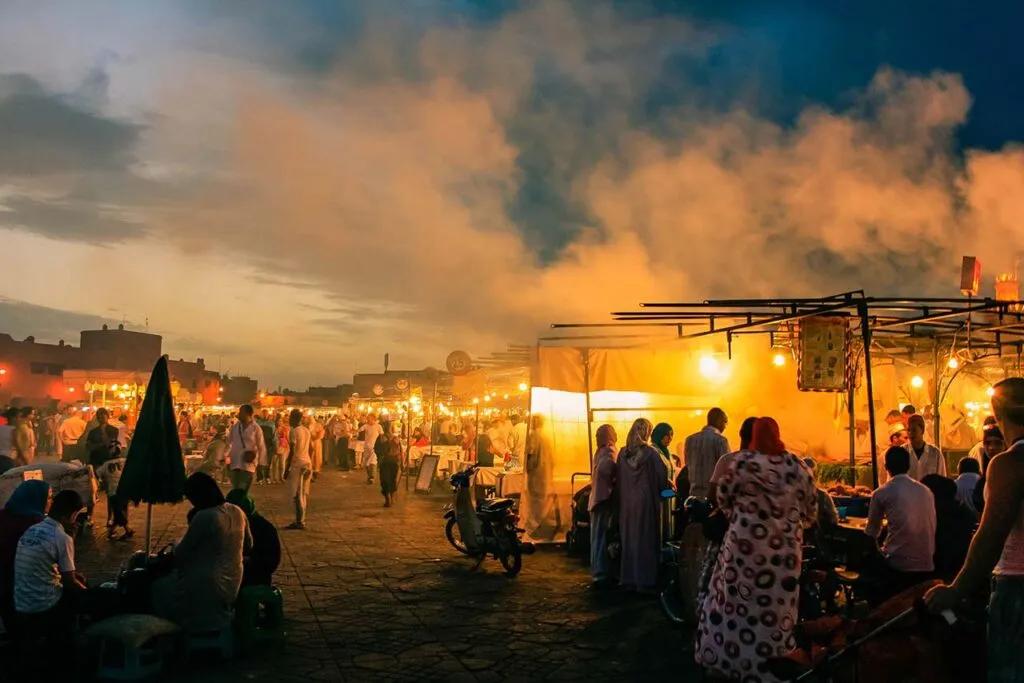
cafes fill. families go out. kids are running around at 10 pm like it is 6 pm. in marrakech, jemaa el-fna can feel more alive after iftar than during a normal evening.
the biggest mistake tourists make is trying to travel like it is a normal month. same lunch time. same late afternoon shopping. same restaurant plan. that is where ramadan feels difficult.
adjust the timing, and it works.
restaurants, cafes, and food: what is open during the day?
this is the part most families worry about.
in tourist cities, you will find food during the day. not everywhere, but enough.
hotel restaurants normally serve guests. riads usually serve breakfast and can often prepare lunch or a light meal if you ask the night before. in marrakech, fez, essaouira, casablanca, rabat, and agadir, many tourist restaurants stay open, especially inside medinas and near main visitor areas.
but local cafes and simple snack places may be closed until sunset. the little sandwich shop that would normally sell kefta or omelette at 1 pm might be shut. the corner cafe where locals drink coffee in the morning might not serve anything until after iftar.
so the smart move is simple.
do not freestyle lunch with kids during ramadan.
ask your riad in the morning. ask your driver. ask your guide. if you are doing a day trip, carry water, fruit, biscuits, crackers, and something your children actually eat. not “we will find something.” that sentence becomes expensive and annoying at 2 pm with tired kids.
in bigger cities, supermarket chains like carrefour, marjane, bim, and small hanout shops may still sell packaged food during the day. opening hours can shift by neighborhood, so do not build your whole plan around one shop being open.
after sunset, eating is easy.
iftar menus appear everywhere. expect harira soup, dates, boiled eggs, chebakia, msemen, breads, orange juice, milk, and sometimes small tagines or grilled meats later. prices depend heavily on the place. a simple local iftar can be cheap. a hotel or rooftop restaurant iftar in marrakech can cost much more. hamid should confirm current local price ranges before publishing if you want numbers in this section.
what changes for tours, drivers, guides, and sightseeing?
private tours still run during ramadan. desert trips still run. city guides still work. airport transfers still happen. the big attractions do not disappear.
but good tour planning changes.
city visits are better earlier in the day. in marrakech, do the serious walking before the afternoon gets slow. koutoubia area, bahia palace, the medina, souks, majorelle garden if it fits your route. do not leave the heaviest walking for 4 pm when your guide is fasting, your kids are hot, and everyone in the streets is thinking about sunset.
for long drives, we normally plan with more patience around iftar time.
if you are driving from marrakech to dades, fez to merzouga, or the desert back toward ouarzazate, your driver may need to stop to break the fast. that is normal. build it into the day. it is not a delay, it is the rhythm of the country that month.
also, avoid arriving into a new medina right at sunset if you can. not because it is dangerous. because it is awkward. porters may be eating. riad staff may be breaking fast. taxis are harder for a short window. check-in can feel slow. better to arrive earlier, settle in, then go out after iftar.
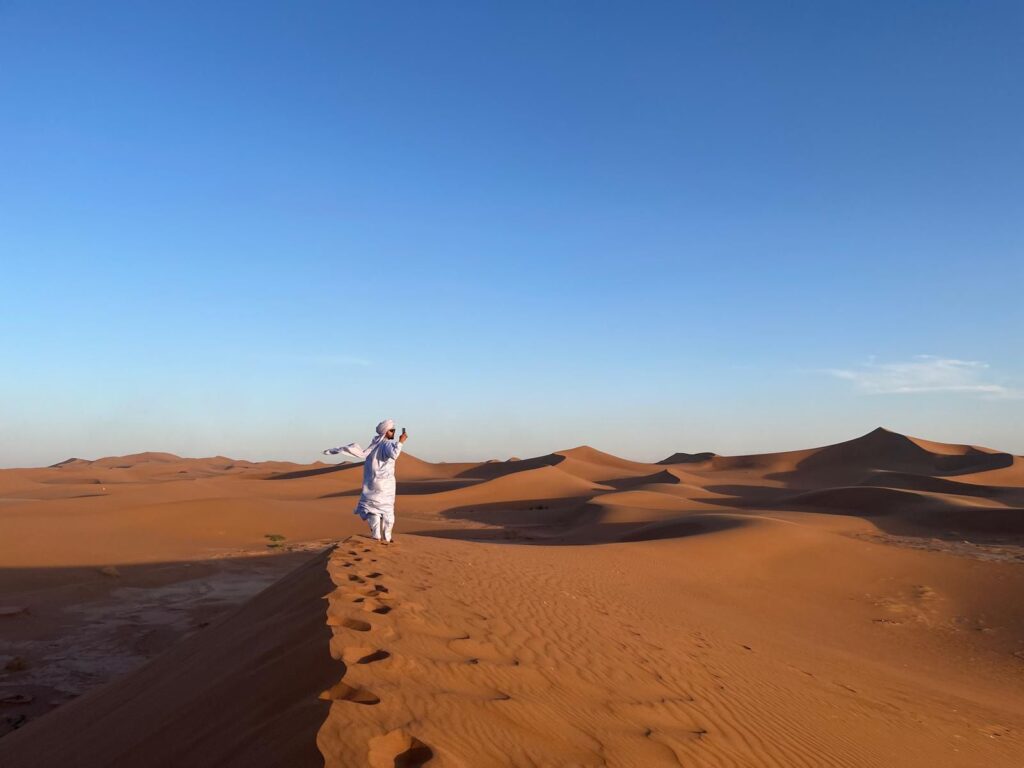
the sahara still works during ramadan, especially in winter or early spring when fasting hours are not as brutal as summer. camel rides are usually timed around sunset anyway, so that can actually feel natural. but again, confirm camp dinner timing and the driver’s iftar stop before the day starts.
for families, a private trip helps a lot here. fixed group tours are not built around children, fasting staff, and sunset timing. a private route can move the medina visit earlier, add a pool break, stop for snacks, and avoid the stupid 6 pm rush.
for a family-friendly route that can be adjusted around ramadan timing, see our 8-day private family morocco tour from marrakech. it already gives enough room for marrakech, the atlas, dades, and the sahara without forcing every hour of the day.
is it respectful to eat, drink, or walk around as a tourist?
yes, tourists can eat and drink.
you are not expected to fast. children are definitely not expected to fast. even many moroccan children do not fast until they are older, and people who are ill, pregnant, traveling, or unable to fast have exemptions.
but do it with common sense.
drinking water quietly is fine. giving your child a snack is fine. eating a sandwich in the middle of a busy local street while everyone around you is fasting is not the move. smoking in public during the day is worse. alcohol is also more sensitive during ramadan, and some bars or licensed restaurants may change hours or close. hotels are usually the easiest place to ask about this.
the best rule is simple.
be normal, but not loud about it.
inside your riad, hotel, private vehicle, or tourist restaurant, no issue. in the middle of a local market at 3 pm, be discreet.
also, patience matters more during ramadan. people are fasting, sleeping less, working, and dealing with traffic before sunset. service can be slower. a shopkeeper may close suddenly before iftar. your driver may be quieter than usual near the end of the day. do not take it personally.
after iftar, the mood changes. people are warmer, cafes open, families come out, and the streets feel social again.
what ramadan means if you are traveling with kids
with children, ramadan is not bad. it just needs tighter planning.
kids need food before adults think about food. that is the whole story.
book stays where breakfast is reliable. ask the riad if they can prepare a simple lunch or picnic. keep snacks in the car. not fancy snacks. bananas, water, biscuits, yogurt drinks if you have a cooler, bread, cheese, whatever your kids already eat.
plan sightseeing in the morning. then rest.
a riad with a plunge pool can be useful, but check safety. many riad pools are small, deep, unfenced, and right in the courtyard. pretty for adults. stressful with toddlers. if you are traveling with very young kids, ask for ground-floor rooms or rooms away from open staircases. ramadan does not change that, but it makes downtime more important.
night life also shifts later.
your kids might love the after-iftar atmosphere. the lights, the food stalls, families walking, the whole city feeling awake. but do not overdo it. if your child is already tired from a day in the medina, dragging them out at 10 pm because “this is the real ramadan vibe” is how you create a meltdown.
one good evening is enough. pick a safe, easy area. in marrakech, that could mean a short walk near jemaa el-fna with a guide or driver nearby, then back to the riad. in essaouira, the evening is usually easier and calmer. in fez, medina nights can be beautiful but more confusing without someone local.
also remember eid at the end of ramadan.
eid al-fitr is a family holiday. transport can be busy before it. some shops close. staff may travel to see family. if your trip lands right on eid, you need confirmations, not guesses. hotels, drivers, restaurant plans, everything.
so, should you visit morocco during ramadan?
yes, if you are flexible.
no, if you want every restaurant open at noon, every shop running normal hours, and zero changes to your plan.
ramadan is slower in the day and more alive at night. it is spiritual, practical, sometimes inconvenient, sometimes beautiful. you see morocco differently. less polished for tourists, more local.
for families, the trick is not complicated. private pacing, morning visits, planned lunches, snacks in the car, and no tight schedule around sunset. do that, and traveling in morocco during ramadan can work very well.
just do not plan it like a normal month.