

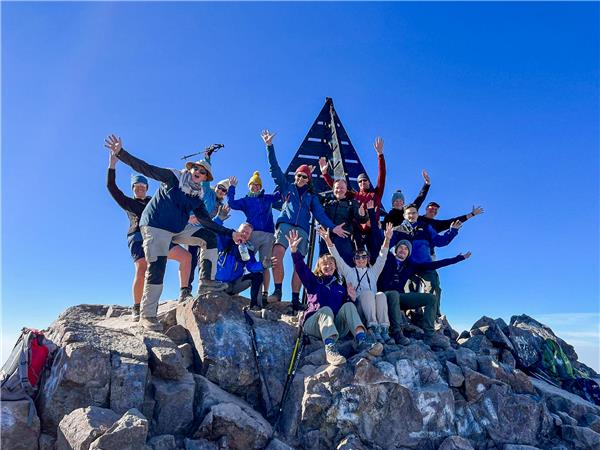
There is something special about leaving the busy streets of Marrakech behind and heading toward the quiet valleys of the High Atlas Mountains. The landscape changes quickly. Red earth, green valleys, terraced fields, and small Amazigh villages replace the city, while the peaks become higher and more dramatic.
At the heart of this mountain region stands Mount Toubkal, the highest mountain in Morocco and North Africa, reaching 4,167 metres above sea level. The mountain is part of Toubkal National Park and is one of Morocco’s most memorable destinations for nature lovers and hikers. According to the Moroccan National Tourist Office, the usual starting point for the trek is the mountain village of Imlil.
Starting the journey in Imlil
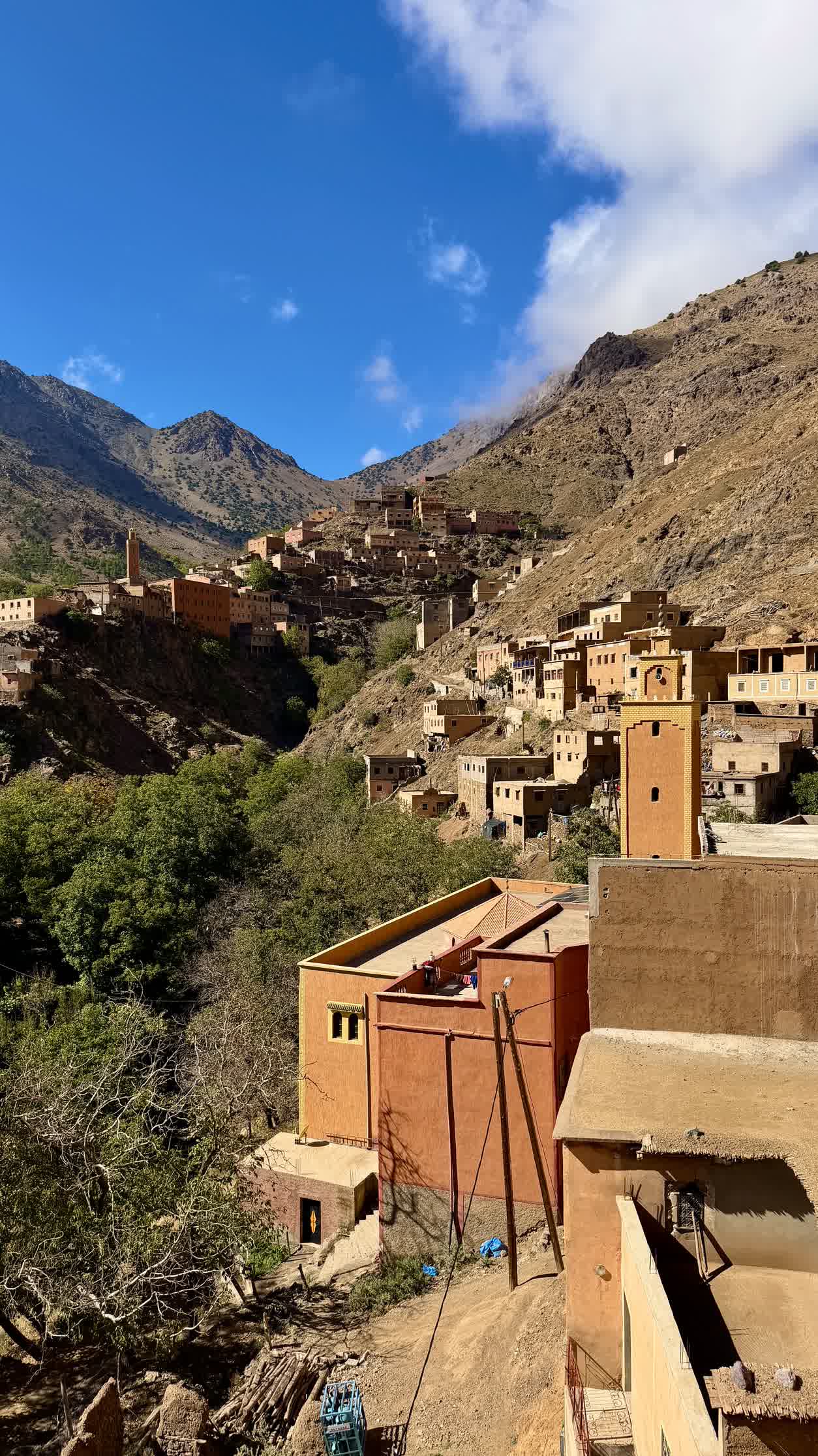
Most Toubkal treks begin in Imlil, a peaceful village located approximately 70 kilometres from Marrakech. Imlil is more than just a starting point. It is a place where visitors can experience mountain life, meet local people, enjoy traditional food, and take in the peaceful atmosphere of the High Atlas.
From Imlil, the trail continues through villages and valleys before reaching Sidi Chamharouch, a well-known stop along the route. The walk becomes more demanding as the trail climbs toward the mountain refuges, located at more than 3,000 metres.
For travellers who do not want to climb Toubkal, Imlil is also an excellent destination for a shorter day hike. The surrounding valleys offer beautiful walks with mountain views, waterfalls, walnut trees, and traditional villages.
You can also combine a mountain experience with one of our private Morocco tours or create a tailor-made itinerary through our Morocco travel planning services.
What is the Toubkal trek like?
The classic Mount Toubkal trek usually takes two or three days. On the first day, hikers travel from Imlil toward the mountain refuge. This is a long walking day, but the route is not technical during the warmer months.
The second day normally begins early in the morning. From the refuge, the trail climbs steadily toward the summit. The air becomes thinner, and the terrain is rocky and steep in places. Reaching the summit requires patience, but the views make the effort worthwhile.
From the top, hikers can see across the High Atlas and, on clear days, enjoy wide views over the surrounding valleys and distant landscapes. After spending a short time at the summit, the descent continues back toward the refuge and then Imlil.
The trek is not a casual walk. Even though the normal summer route does not usually require advanced climbing skills, the altitude, long walking days, and changing weather can make it challenging.
When is the best time to climb Toubkal?
The best season for a simpler ascent is generally from late spring to early autumn, when the trail is usually free from heavy snow. July, August, and September can be warm during the day, but temperatures may still be cold at night.
Winter brings snow and ice to the mountain. During this period, crampons, an ice axe, suitable clothing, and previous mountain experience may be necessary. Weather conditions can change quickly, so it is important to check the conditions before starting the trek.
The official Morocco tourism website provides useful background information about the High Atlas and Mount Toubkal.
What should you bring?
Good preparation makes the experience much more enjoyable. Hikers should bring:
- Comfortable hiking boots with good grip
- Warm layers and waterproof clothing
- A sleeping bag suitable for mountain temperatures
- A headlamp
- Sun protection, including sunglasses and sunscreen
- Plenty of water and high-energy snacks
- A small first-aid kit
- A backpack suitable for several hours of walking
It is also important to walk at a comfortable pace and drink water regularly. Altitude affects people differently, so anyone feeling unwell should tell their guide and avoid continuing without advice.
For current travel and safety information, visitors should also check the Government of Canada’s Morocco travel advice, especially before travelling in remote mountain areas.
Travelling responsibly in the Atlas Mountains
The Toubkal region is home to Amazigh communities whose traditions and way of life are an important part of the experience. Visitors can help protect the area by respecting local customs, avoiding litter, using local accommodation and restaurants, and supporting local guides and mule handlers.
A responsible trek is not only better for the environment. It also creates a more meaningful connection with the people who live in the mountains.
More than just a mountain
Climbing Mount Toubkal is not only about reaching the highest point in Morocco. The journey includes quiet valleys, mountain villages, local food, traditional hospitality, and a slower way of travelling.
Whether you want to complete the summit trek or simply explore the beautiful landscapes around Imlil, the High Atlas offers an authentic side of Morocco that is very different from the cities and the desert.
If you would like to include Mount Toubkal in your Moroccan holiday, contact Morocco Travel Experts and tell us your travel dates, fitness level, and the type of experience you are looking for. We can help arrange a comfortable and locally guided journey through the Atlas Mountains.
About the author
Born and raised in Morocco, Hamid designs private family journeys with trusted drivers, licensed guides, riads, desert camps, and realistic pacing.