

Loukkos Wetlands Morocco: A Complete Guide to Birdwatching, Wildlife and Larache
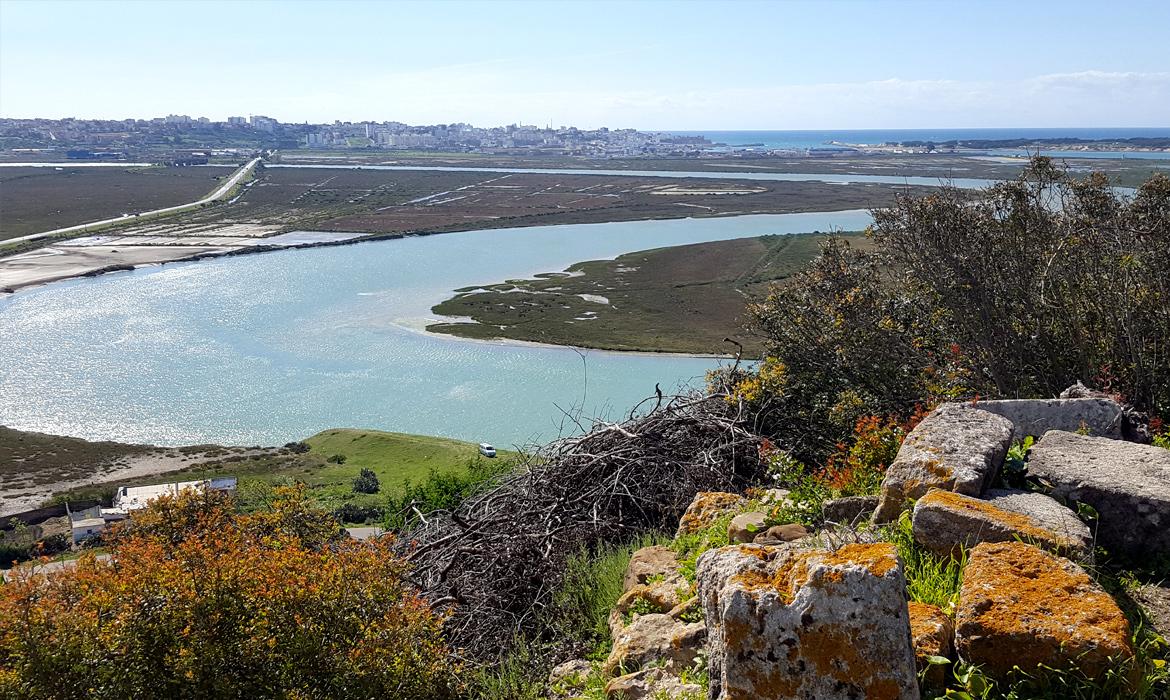
Northern Morocco is home to some remarkable natural landscapes, but many travelers pass through the region without discovering its wetlands. Just outside the coastal city of Larache lies the Lower Loukkos Wetland Complex, a vast landscape of freshwater marshes, tidal waterways, salt flats, and agricultural plains.
Known locally as the Marais du Bas Loukkos or Complexe du Bas Loukkos, this protected wetland is one of Morocco’s important habitats for migratory birds and aquatic wildlife.
Unlike the busy medinas of Marrakech and Fes, the Loukkos Wetlands offer a quieter experience. Here, visitors can watch herons moving through shallow water, explore the surrounding countryside, discover traditional salt pans, and visit one of northern Morocco’s most fascinating archaeological sites.
For travelers interested in birdwatching, photography, nature, and places beyond the usual tourist routes, the Loukkos Wetlands are worth discovering.
Where Are the Loukkos Wetlands Located?
The Loukkos Wetlands are located in northwestern Morocco, near the Atlantic coastal city of Larache, within the Tangier-Tetouan-Al Hoceima region.
The wetlands occupy the lower reaches of the Loukkos River, which flows into the Atlantic Ocean at Larache.
This landscape includes freshwater marshes, estuarine waters, floodplains, salt flats, and former salt-production areas.
The wetlands are approximately 80 kilometers south of Tangier and 160 kilometers north of Rabat.
Their location makes them an interesting stop for travelers exploring northern Morocco, particularly those traveling between Tangier, Asilah, Larache, and Rabat.
What Makes the Lower Loukkos Wetlands Special?
The Lower Loukkos Wetland Complex is not a single lake or lagoon. It is a collection of interconnected habitats shaped by the Loukkos River, seasonal rainfall, tidal movements, and centuries of human activity.
Near the Atlantic coast, the river meets seawater, creating an estuary where freshwater and saltwater mix.
Farther inland, freshwater marshes, shallow pools, floodplains, and agricultural fields create additional habitats.
This diversity is what makes the wetlands so important for wildlife.
Some areas contain aquatic vegetation and reeds, while others consist of exposed mudflats and shallow water where birds search for food.
The complex also includes abandoned salt pans, which have become valuable feeding and resting areas for certain waterbirds.
The Lower Loukkos Wetlands were designated a Ramsar Wetland of International Importance on January 15, 2005.
The original Ramsar designation covered 3,600 hectares, while more recent Ramsar documentation describes an area of approximately 6,630 hectares.
This international recognition highlights the importance of conserving the wetlands and the species that depend on them.
Birdwatching in the Loukkos Wetlands
Birdwatching is one of the main reasons to explore the Loukkos Wetlands.
Northern Morocco lies along important migration routes connecting Europe and Africa. During migration, birds use wetlands such as Loukkos as places to rest, feed, and recover before continuing their journeys.
The area also supports resident birds and species that spend the winter in Morocco.
Because the wetland contains several different habitats, visitors have opportunities to observe ducks, herons, waders, and birds of prey.
Birds You Can See in the Loukkos Wetlands
Some of the notable species associated with the area include:
- Marbled teal: A threatened duck species associated with shallow Mediterranean wetlands.
- Ferruginous duck: A distinctive diving duck found in suitable freshwater habitats.
- Purple heron: A large heron often associated with reedbeds and marshes.
- Squacco heron: A smaller heron that feeds in shallow water and wetland vegetation.
- Red-crested pochard: A waterbird recognized by the male’s striking reddish-orange head.
- Marsh harrier: A bird of prey that hunts over wetlands and reedbeds.
- Waders and shorebirds: Various species that feed along muddy banks, shallow pools, and salt pans.
Other birds may be encountered depending on the season, weather, and water levels.
Wildlife sightings are never guaranteed, and some of the rarer species require patience and knowledge of suitable habitats.
For dedicated birdwatchers, a local guide familiar with the wetland is particularly useful.
The Lixus Salt Pans: An Important Bird Habitat
One of the most interesting areas associated with the Lower Loukkos Wetlands is the Lixus salt pans, known in French as Les Salines de Lixus.
Salt production has been part of the landscape around Larache for generations.
Although many salt pans are no longer actively used, these shallow basins continue to provide habitats for waterbirds.
Different water depths and salt concentrations create feeding opportunities for various species.
During migration, shorebirds may use these areas to rest and search for food.
The salt pans also offer an interesting perspective on the relationship between human activity and the natural environment.
While some former industrial landscapes have become useful wildlife habitats, the wetlands still face environmental pressures from water management, agricultural development, and habitat disturbance.
Visitors interested in exploring the salt pans should arrange access responsibly and avoid disturbing birds.
Wildlife Beyond Birds
Although birds are the most visible attraction, the Loukkos Wetlands support other important wildlife.
The wetland complex provides habitat for amphibians, fish, aquatic invertebrates, and mammals.
One particularly notable species is the European otter, which is associated with healthy aquatic environments.
The European eel is another important species recorded in the wetland system.
Aquatic plants and freshwater vegetation provide shelter and feeding habitats for wildlife.
Some areas also contain water lilies and willow vegetation, both of which contribute to the ecological diversity of the landscape.
These habitats are important not only for animals but also for maintaining water quality and supporting the wider river ecosystem.
The Loukkos River and Its Importance
The Loukkos River is one of the defining geographical features of northern Morocco.
It flows through agricultural landscapes before reaching the Atlantic Ocean at Larache.
The river has supported human settlements, farming, fishing, and trade for centuries.
Its lower valley contains fertile land, making agriculture an important part of the regional economy.
Today, rice cultivation and other agricultural activities are closely connected to the surrounding floodplains.
However, the relationship between agriculture and wetlands is complex.
Drainage, irrigation, and changes in water flow can affect natural habitats and the species that depend on them.
The Loukkos Wetlands therefore play an important role in both biodiversity conservation and the management of local water resources.
Things to Do Around the Loukkos Wetlands
The Lower Loukkos Wetlands are not a conventional tourist attraction with a single entrance and organized visitor route.
They are a natural landscape best explored with local knowledge and a flexible itinerary.
1. Go Birdwatching
Birdwatching is the most rewarding activity for nature enthusiasts.
Different parts of the wetland attract different species, depending on water levels and the time of year.
Visitors should bring binoculars and, if possible, a camera with a zoom lens.
A knowledgeable local birdwatching guide can help identify species and locate suitable observation points.
2. Explore the Lixus Salt Pans
The salt pans provide an opportunity to discover one of the area’s distinctive wetland habitats.
Their shallow basins and open landscapes can be especially interesting for bird photography.
Access conditions may vary, so visitors should check local arrangements before entering any salt-production areas.
3. Visit the Ancient City of Lixus
A visit to the Loukkos Wetlands can be combined with the nearby archaeological site of Lixus.
Located on a hill overlooking the Loukkos River, Lixus is one of northern Morocco’s most important ancient settlements.
The site has a long history connected to Phoenician, Punic, Mauritanian, Roman, and later Islamic periods.
Visitors can explore archaeological remains and enjoy views across the surrounding river valley.
The location also provides an interesting connection between the natural landscape and the history of settlement and trade in northern Morocco.
4. Discover Larache
Larache is a coastal city with a relaxed atmosphere and a history shaped by Moroccan, Spanish, and Atlantic influences.
Visitors can explore the old medina, walk around the central squares, discover the waterfront, and enjoy local seafood.
The city makes a convenient base for exploring the Loukkos Wetlands and nearby Lixus archaeological site.
5. Enjoy Nature Photography
The Loukkos Wetlands offer opportunities for landscape and wildlife photography.
Shallow water, reeds, birds, and changing light create interesting scenes throughout the day.
Early morning can be especially rewarding, with softer light and potentially calmer conditions.
Photographers should maintain a respectful distance from wildlife and avoid entering sensitive habitats.
Best Time to Visit the Loukkos Wetlands
The Loukkos Wetlands can be explored throughout the year, but the best season depends on your interests.
Spring: March to May
Spring is an excellent time for visiting northern Morocco.
The countryside is often green after winter rainfall, and migratory birds may be moving north through the region.
Temperatures are generally comfortable for birdwatching and exploring nearby historical sites.
Summer: June to August
Summer usually brings warmer and drier weather.
It can be a pleasant time to explore Larache and the Atlantic coast, although birdwatching conditions may differ from the main migration seasons.
Visitors should prepare for sunny weather and plan outdoor activities during cooler parts of the day.
Autumn: September to November
Autumn is another rewarding period for birdwatching.
Migratory birds travel south, and wetland habitats can provide important resting and feeding areas.
The generally mild weather makes it a good time for combining wildlife observation with sightseeing.
Winter: December to February
Winter can be particularly interesting for observing waterbirds.
However, rainfall may cause flooding or make some tracks difficult to access.
Travelers should plan according to local conditions and avoid entering waterlogged or environmentally sensitive areas.
For a combination of birdwatching and comfortable sightseeing weather, spring and autumn are excellent choices. Winter is also worth considering for waterbird enthusiasts.
How to Get to the Loukkos Wetlands
The easiest way to visit the Loukkos Wetlands is by car or private transportation.
Larache is accessible from the main Atlantic motorway connecting Tangier, Rabat, and Casablanca.
From Larache, visitors can explore suitable parts of the lower Loukkos valley with local guidance.
Unlike major tourist attractions, the wetland complex does not have one clearly defined visitor entrance.
Access to particular observation areas may depend on local roads, agricultural activity, seasonal flooding, and conservation restrictions.
For this reason, visitors interested in serious birdwatching should consider arranging a knowledgeable local guide.
How Much Time Do You Need?
For travelers who want a general introduction to the area, a half-day can provide time to see some of the wetland landscapes.
However, a full day is a better option if you want to combine birdwatching with the archaeological site of Lixus and a visit to Larache.
Dedicated birdwatchers may prefer spending additional time in the region to explore different habitats and observe wildlife during the most favorable conditions.
Loukkos Wetlands vs. Merja Zerga: Which Should You Visit?


Both the Loukkos Wetlands and Merja Zerga are important natural destinations along Morocco’s Atlantic coast, but they offer different experiences.
Merja Zerga is a coastal tidal lagoon near Moulay Bousselham, particularly known for birdwatching and traditional boat excursions.
The Loukkos Wetlands are a more varied landscape of freshwater marshes, estuarine habitats, salt pans, and agricultural floodplains near Larache.
Merja Zerga may be more appealing for visitors looking for a lagoon excursion and a relaxed fishing-village atmosphere.
Loukkos is especially interesting for travelers who want to combine wildlife observation with archaeology, local history, and a visit to Larache.
For birdwatchers traveling along Morocco’s northern Atlantic coast, visiting both areas can provide a broader understanding of the country’s wetland ecosystems.
Conservation and Responsible Tourism
The Lower Loukkos Wetlands face several environmental challenges.
Agricultural expansion, drainage, changes in water flow, pollution, and human disturbance can affect the natural habitats.
These pressures make conservation efforts particularly important.
Visitors can help protect the wetlands by staying on suitable access routes, avoiding sensitive bird habitats, and keeping a respectful distance from wildlife.
Never enter nesting areas or disturb birds for photographs.
Choosing knowledgeable local guides and supporting responsible tourism activities can also help increase awareness of the area’s ecological importance.
Are the Loukkos Wetlands Worth Visiting?
Yes, especially for travelers interested in nature, birdwatching, and discovering lesser-known places in Morocco.
The Loukkos Wetlands are not a destination with large visitor centers or organized entertainment.
Their appeal lies in the diversity of the landscape, the birdlife, and the connection between the Loukkos River, surrounding communities, and the ancient history of Larache.
For visitors already traveling through northern Morocco, the wetlands can be a rewarding addition to a broader itinerary.
They are particularly suitable for nature enthusiasts, photographers, birdwatchers, and travelers who enjoy exploring places beyond the usual tourist attractions.
Explore Northern Morocco with Morocco Travel Experts
At Morocco Travel Experts, we help travelers discover Morocco beyond its most famous destinations.
Northern Morocco offers a fascinating combination of coastal towns, archaeological sites, natural landscapes, and traditional communities.
The Loukkos Wetlands can be included in a customized itinerary alongside Larache, Lixus, Asilah, Tangier, and other destinations in the region.
Whether you’re interested in birdwatching, photography, history, or exploring Morocco’s Atlantic coast, our team can help you plan a journey suited to your interests.
Contact Morocco Travel Experts to plan your private Morocco tour.
Frequently Asked Questions About the Loukkos Wetlands
Where are the Loukkos Wetlands in Morocco?
The Loukkos Wetlands are located near Larache in northwestern Morocco, where the Loukkos River approaches the Atlantic Ocean.
Are the Loukkos Wetlands a protected area?
Yes. The Lower Loukkos Wetland Complex was designated a Ramsar Wetland of International Importance in 2005.
Is Loukkos good for birdwatching?
Yes. The wetlands support numerous waterbirds, including marbled teal, ferruginous ducks, herons, and other migratory and resident species.
What is the best time to visit the Loukkos Wetlands?
Spring and autumn are excellent for combining pleasant weather with birdwatching. Winter can also be rewarding for observing waterbirds.
Can you visit the Loukkos Wetlands from Tangier?
Yes. The wetlands near Larache can be included in a day trip from Tangier or as part of a longer northern Morocco itinerary.
What is the difference between Loukkos and Merja Zerga?
Loukkos is a wetland complex containing marshes, salt pans, floodplains, and estuarine habitats. Merja Zerga is a coastal tidal lagoon near Moulay Bousselham. Both are important birdwatching destinations.
Is Lixus near the Loukkos Wetlands?
Yes. The ancient archaeological site of Lixus is situated on a hill overlooking the Loukkos River, near Larache.
Do you need a guide to visit the Loukkos Wetlands?
A guide is not always essential for viewing the general landscape, but a knowledgeable local guide is recommended for birdwatching and accessing suitable observation areas responsibly.