
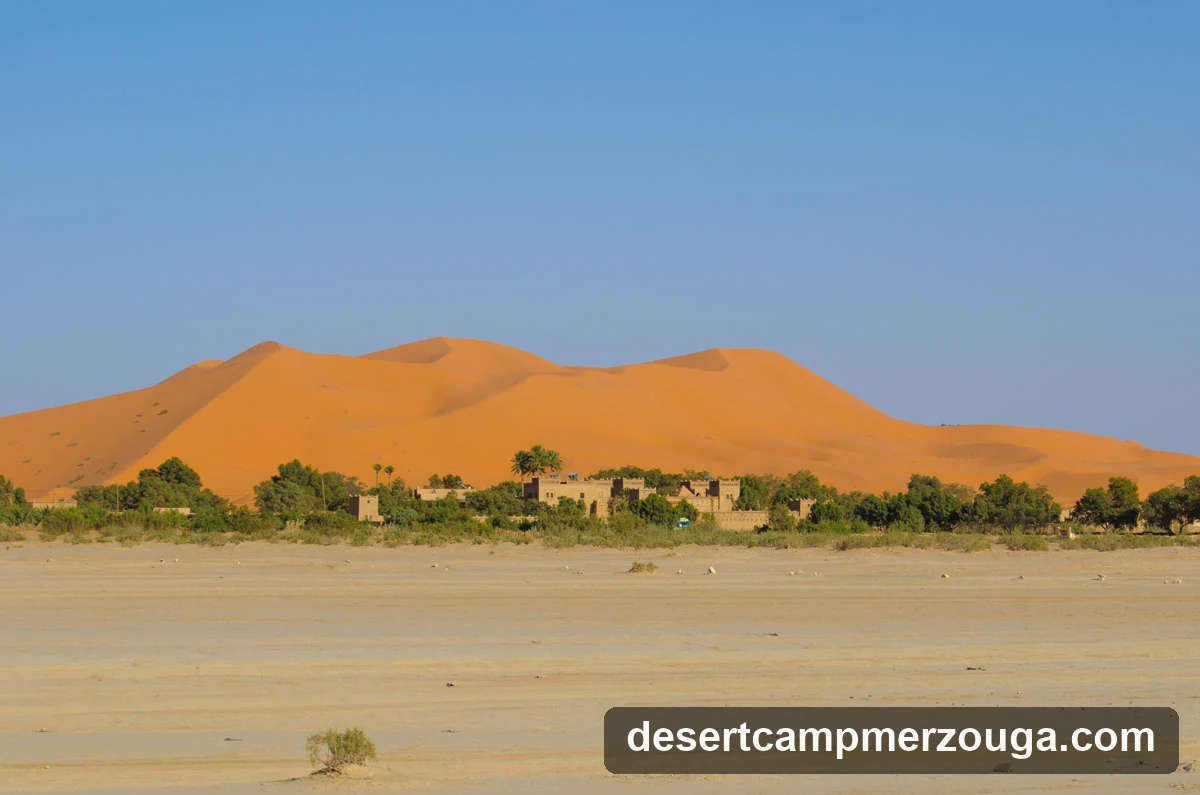
merzouga desert: a local guide to erg chebbi
written by hamid el maimouni, a licensed moroccan guide. last updated 2026-06-20.
the first time you crest the last rise before merzouga, your brain refuses what it sees for about three seconds. orange. a wall of it. dunes the size of office buildings, lined up against the sky like waves that forgot to fall. that is erg chebbi. it sits about 50 kilometers south of erfoud in the southeast corner of morocco, almost touching algeria, and it does not look real until you are standing on it.
i have been guiding clients into this desert for years. families from chicago, couples from sydney on their honeymoon, retired teachers from rotterdam, kids who arrive in the 4×4 mostly asleep and are wide awake the moment we open the door. the look on people’s faces is always the same. half disbelief. half the deep quiet of a person who has stopped pretending to be anywhere else.
this page is what i would tell you if we were sitting at a café in marrakech with a pot of mint tea between us, and you asked me what merzouga actually is. not the polished sahara from a travel magazine. the real one. the cold mornings, the bread baked in the sand, the silence that lets you hear your own heart, the berber driver who knows three lullabies in tamazight and will sing them to your kids if you ask.
what follows is the geography, the history, the experiences worth doing, the ones to skip, where to stay, when to come, and a map you can use to figure out how to get here. if at any point you want to stop reading and just write to someone who lives an hour from these dunes, that is me. i answer my own emails.
where merzouga actually is
merzouga is a small village. you can walk across it in fifteen minutes. what makes it famous is what sits behind it: erg chebbi, a 50-kilometer field of wind-piled dunes that runs along the eastern edge of the village toward the algerian frontier.
administratively it is in the drâa-tafilalet region, between erfoud and the algerian border. the tallest dunes reach about 150 meters, which is taller than the great pyramid of giza. the sand is fine, orange, almost pink in the late afternoon. it does not behave like beach sand. you sink, you slip, you laugh, you give up trying to look graceful.
climate is what you would expect from the sahara. dry. hot in summer, sometimes 45 to 50°c. mild in winter days, cold at night. spring and autumn are the sweet spot. i write more about timing in the best time section below.
map of erg chebbi and the region
this is where you actually need to go. zoom out to see how it sits relative to marrakech and fes, which are the two cities most people drive from.
note the proximity to erfoud (north) and rissani (south). erfoud has the nearest small hospital and atm. rissani is the historical market town. neither feels like a tourist hub, and that is part of why merzouga still feels like merzouga.
a short history (and why it matters when you visit)
for a thousand years, this corner of morocco was a caravan stop. salt, gold, slaves and spices moved north out of timbuktu, across the sahara, through what is now mali and algeria, and into the rissani market on their way to fes and beyond. the people who guided those caravans are the same people, by lineage, who now drive your 4×4 and pour your mint tea at the camp.
the local population is mostly amazigh (berber), with a strong presence of the aït khebbach tribe, and historically a significant jewish community in rissani that traded with the caravans for centuries. that history is not in a museum here. it is in the music, the bread, the way someone says hello.
if you are interested in the deeper context, the trans-saharan trade routes are well documented, and i recommend reading a little before you come. it changes what you see.
video: what a night in the dunes actually looks like
before you commit to a 9-hour drive each way, watch this. it is the closest a screen can get to what merzouga feels like at the moment the sun drops.
best things to do in the merzouga desert
some of these are obvious. some are not. i am giving you my honest take, not a list someone copied from a wikipedia stub.
1. camel trek into the dunes at sunset
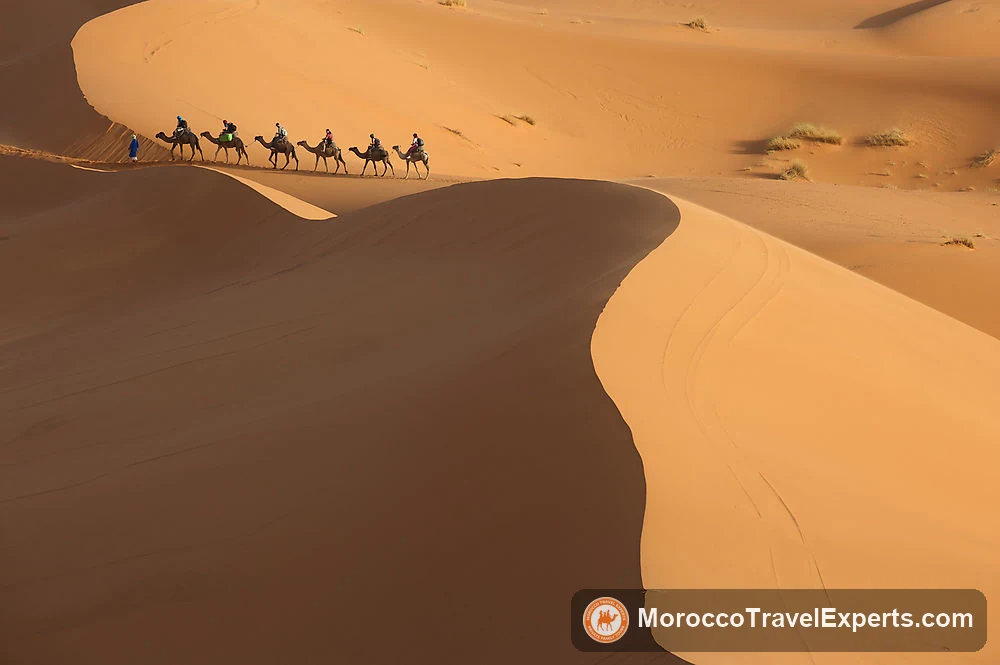
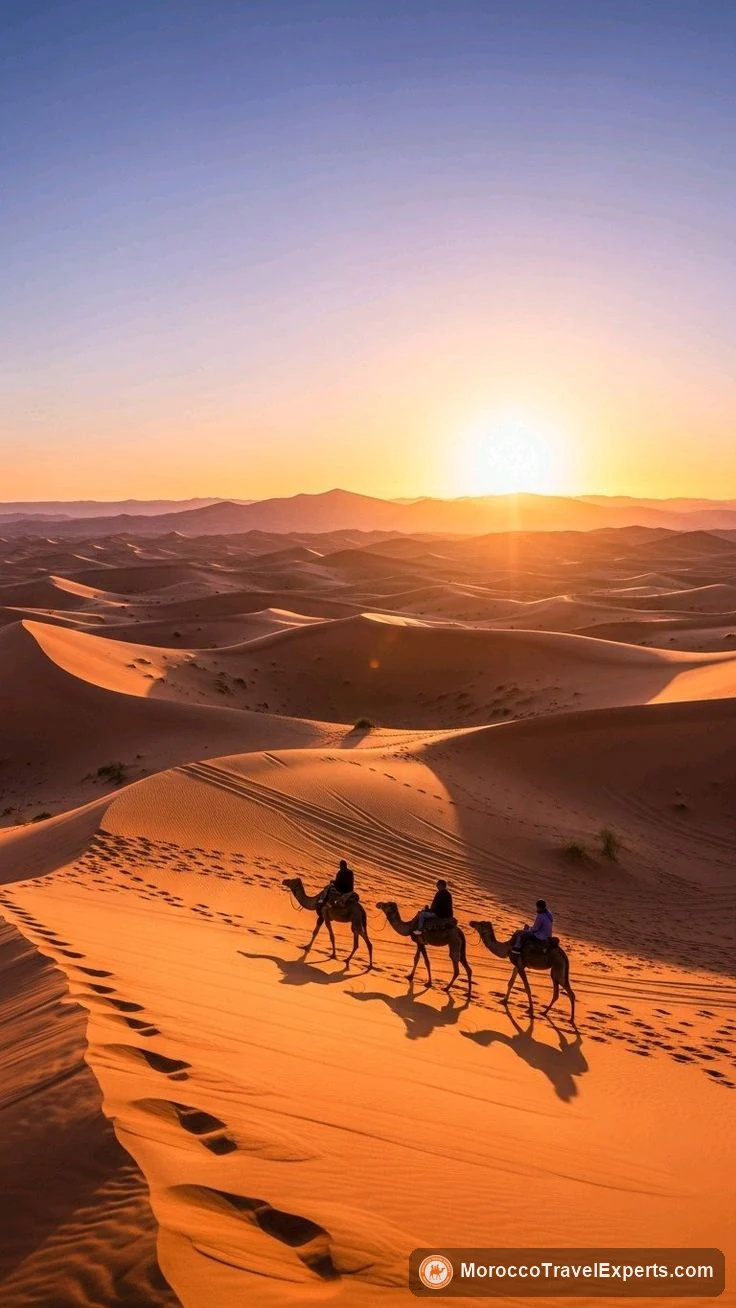
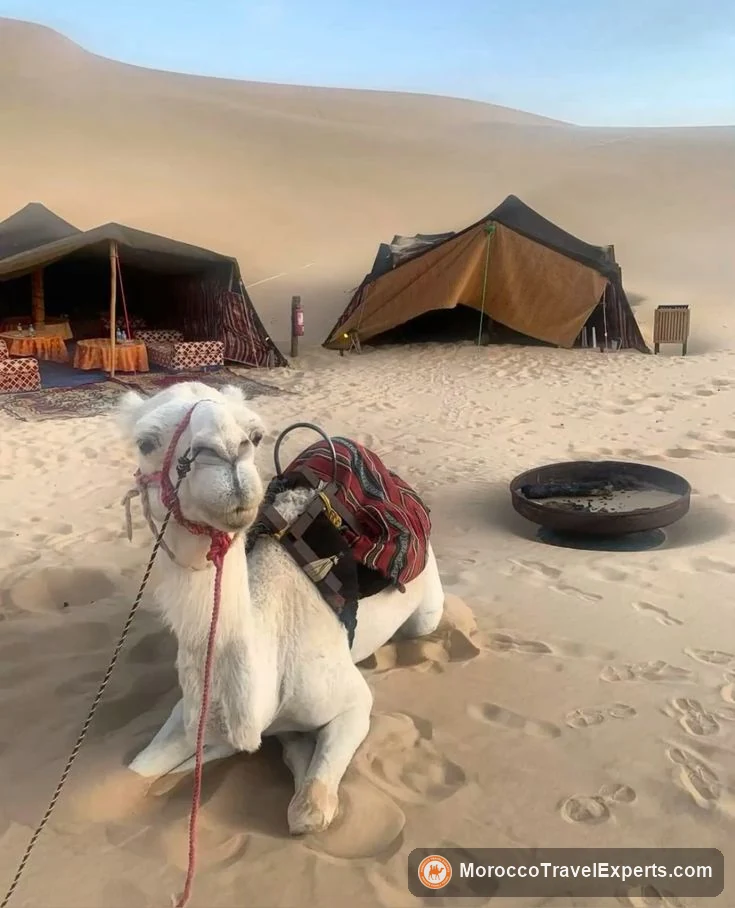
this is the headline experience. you mount the camel at the edge of the dunes, around 4 or 5pm depending on season, and you walk into the sand for 45 to 60 minutes until you reach the camp. the light shifts the whole way. orange becomes red becomes purple becomes the kind of blue you only see in the desert.
kids generally do well from age six. for younger ones, the 4×4 transfer to camp is more comfortable, and they still get the camel ride next morning if they want it. more on this in our camel ride with kids guide.
2. one night (or two) at a desert camp
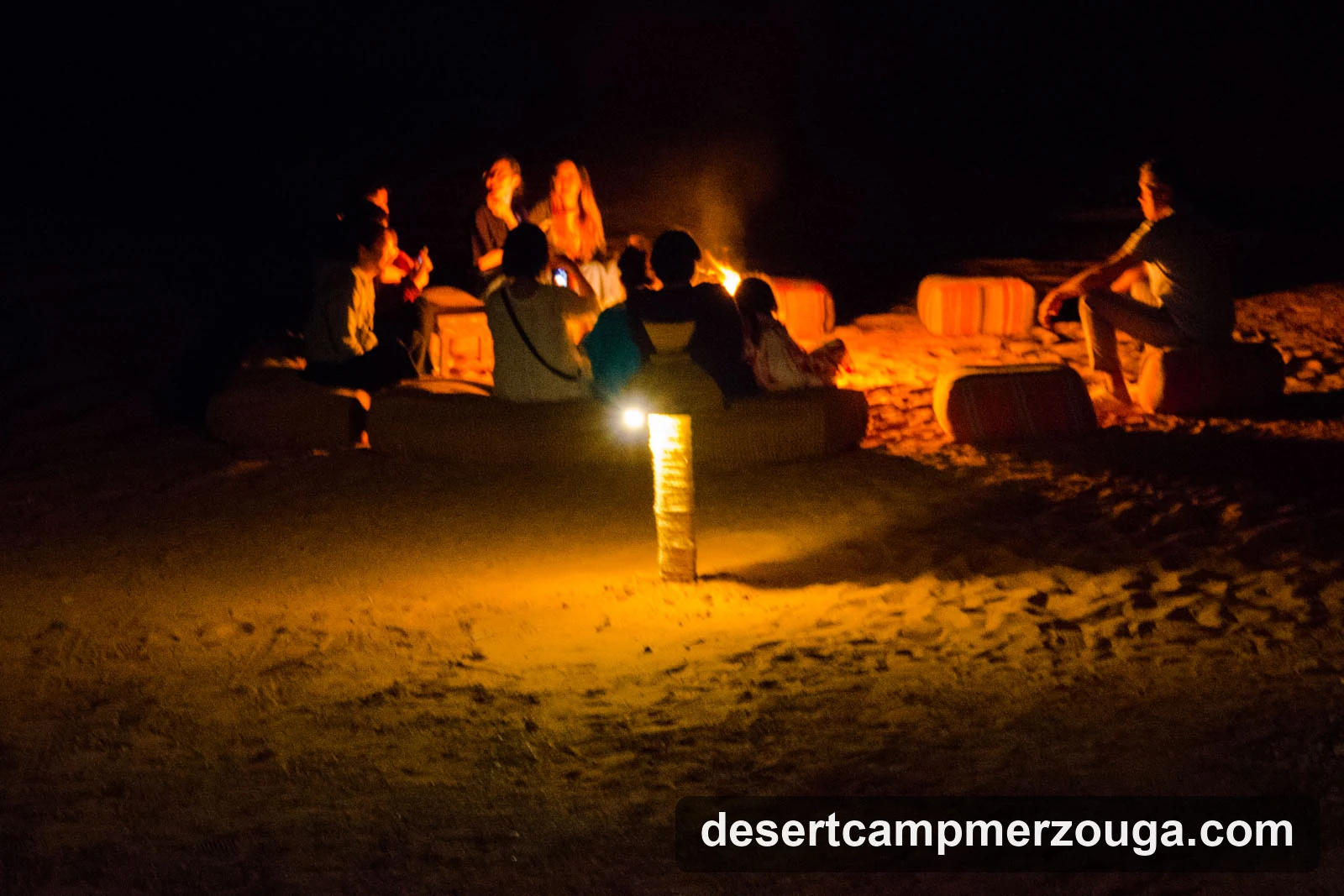
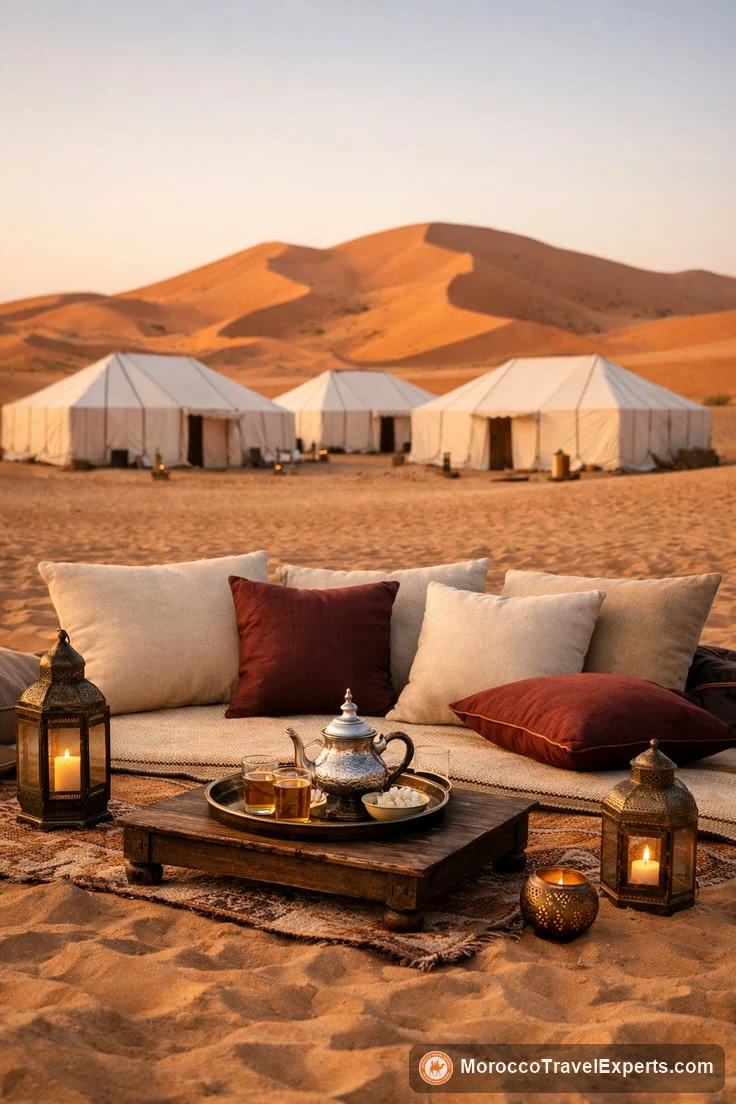
the camp is the trip. tents are usually berber-style, with proper beds, private bathrooms in the better camps, and a fire pit in the middle where dinner happens. someone plays the drums. someone teaches your kids three words of tamazight. you eat tagine. you walk barefoot up the closest dune and look at a sky that has more stars than you remembered existed.
we have detailed guides on the camp experience for families in our merzouga desert camp with kids article, and a separate piece on the higher end options in our luxury sahara camp with family suites guide. there is a wide quality range out here. choose carefully.
3. 4×4 dune adventure and berber villages
the morning after the camp, or on a separate day, you can go further into the dunes by 4×4 with a local driver. this is when you see the parts of the erg most tourists do not. the deepest dunes. the nomad families still living in tents. the small fossil quarries. an oasis that appears like a hallucination after an hour of sand.
this is the half day i tell every client to budget for. it is not a thrill ride. it is the closest you will get to seeing how people actually live out here.
4. sandboarding and quad biking
fine, you want adrenaline. sandboarding is harder than it looks (the sand grabs the board) and a lot of fun if you are willing to fall over. quad biking covers more ground faster. both are best done in the cooler hours, early morning or late afternoon.
for teenagers especially, sandboarding is a winner. we covered it in detail in our sandboarding with teenagers guide.
5. sunrise from the high dunes
the camp staff will wake you around 5:30. you walk ten minutes uphill in the dark, sit on the crest of a tall dune, and watch the horizon do its thing. people often go quiet for a long time after this. that is normal.
i tell families with kids: do this. even if they grumble at 5:30. they will remember it for the rest of their lives.
6. a visit to khamlia (gnawa music village)
khamlia is a small village south of merzouga with a long history. its inhabitants are descended from sub-saharan africans who came north via the caravan routes. they kept their music. it is called gnawa, and it is some of the most hypnotic, layered music you will ever hear live, played on the guembri and the qraqab (iron castanets). a daytime visit usually includes a short performance and mint tea. always go.
berber culture, food, and what hospitality actually looks like
three things to know.
first, the people here are mostly amazigh, not arab. it matters because the language, the customs and the music are different. tamazight is spoken in most homes. learn one word: azul (hello). people light up when they hear it.
second, hospitality is not performance. if you are invited for tea, sit, take three glasses (the local saying: the first is gentle as life, the second strong as love, the third sweet as death). do not refuse the second pour. it is rude.
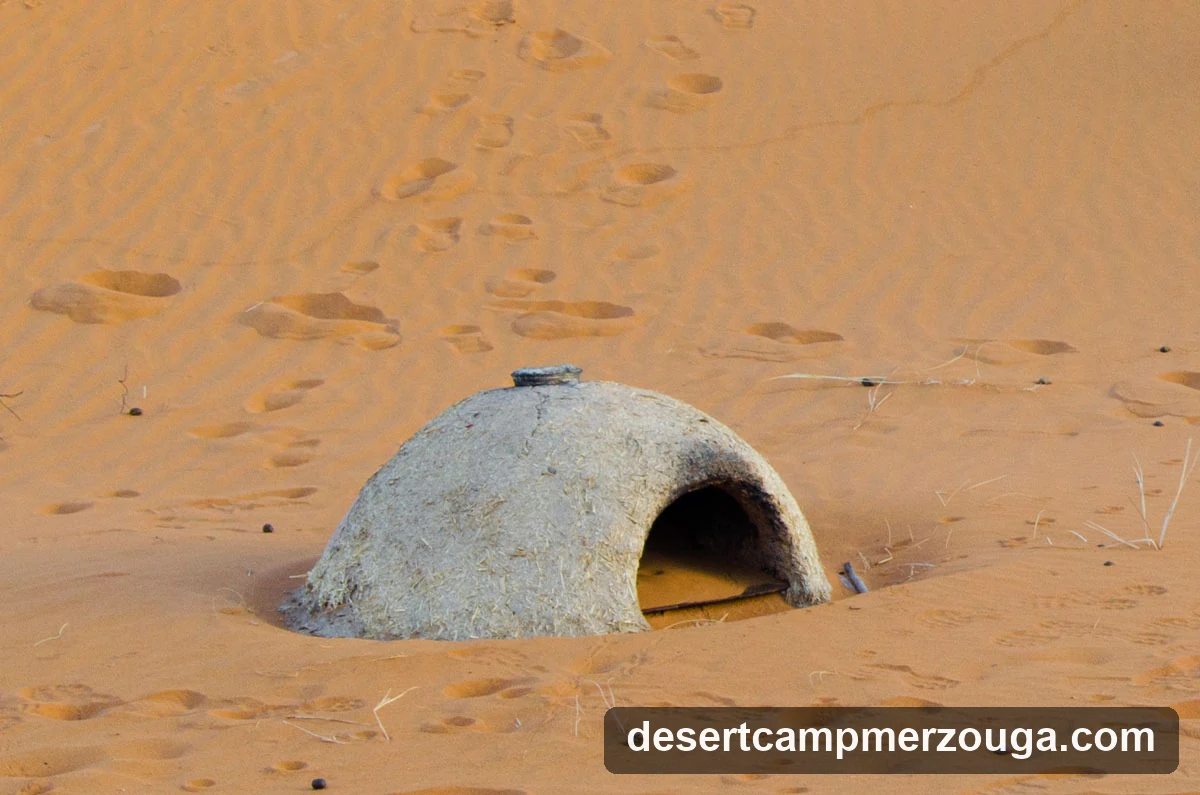
third, the food. tagine, yes, but also medfouna, sometimes called berber pizza, baked under hot sand. it is bread stuffed with spiced meat, herbs and almonds. you will not find a better version of it anywhere else in morocco. rissani is where to eat it.
wildlife, the oasis, and the salt lake (yes, there is one)
most people do not realize there is a seasonal salt lake just outside merzouga, called dayet srji. when winter rains fill it, flamingos arrive. so do other migratory birds. in a wet year, the lake is one of the best birdwatching spots in north africa. in a dry year, there is nothing there. it is a coin flip and worth asking your guide before you build a day around it.
fauna in the dunes themselves is sparse but specific: desert foxes (fennec), gerbils, sand lizards, the occasional desert hedgehog. you will probably not see them in daylight. nights at the camp are the best chance, around the fire pit.
flora is mostly tamarisk and date palms in the oasis pockets. there are a few small palmeries between merzouga and rissani that are worth a 20 minute walk-through if you are curious.
best time to visit merzouga
short answer: october to mid-april. nothing in between is a deal breaker, but those months are objectively easier on the body.
- october to november: warm days (25 to 30°c), cool nights (10 to 15°c). this is my favorite window.
- december to february: cool days (15 to 20°c), cold nights (2 to 5°c sometimes lower). atmospheric. bring real layers. very few tourists.
- march to mid-april: same as october, slightly warmer. high season starts mid-march for europeans on school break.
- mid-april to may: warming up fast. still doable.
- june to august: 45°c+ days, warm nights. do not bring small children or anyone with heart or breathing issues. honestly, do not come.
- september: cooling down. last two weeks are pleasant.
for families, we wrote a fuller monthly breakdown in our best time to visit morocco with kids guide. the merzouga section there has more month-by-month detail.
where to stay in the merzouga desert
two broad choices. sleep in the village in a guesthouse or kasbah hotel, or sleep inside the dunes at a desert camp. i recommend the camp for at least one night. ideally two.
desert camps (inside the dunes)
this is the iconic stay. quality ranges from basic shared-bathroom tents at $40 a head, to private luxury suites with hot water showers at $400 a head. the best camps in the high end are typically:
- merzouga luxury desert camp: top tier comfort, deep in the dunes, beautiful food.
- white camel lodge: a great mid to upper option with a strong reputation among families.
we book direct with several others depending on availability, your budget, and how deep into the dunes you want to be. talk to me about specifics.
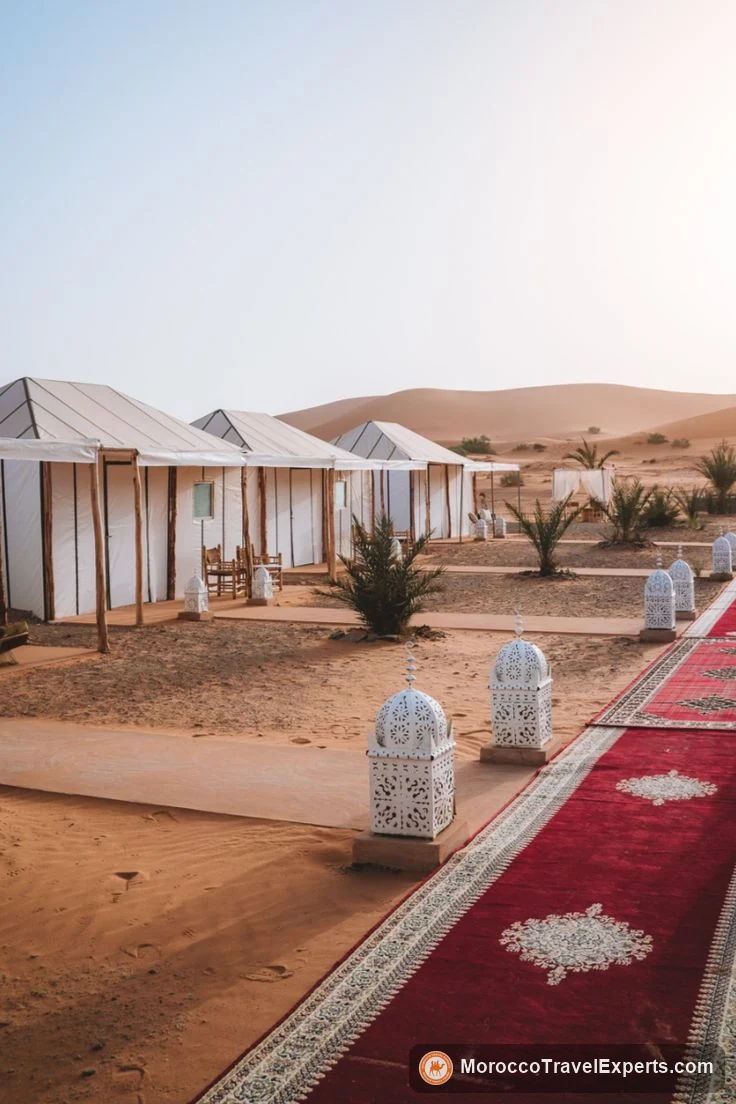
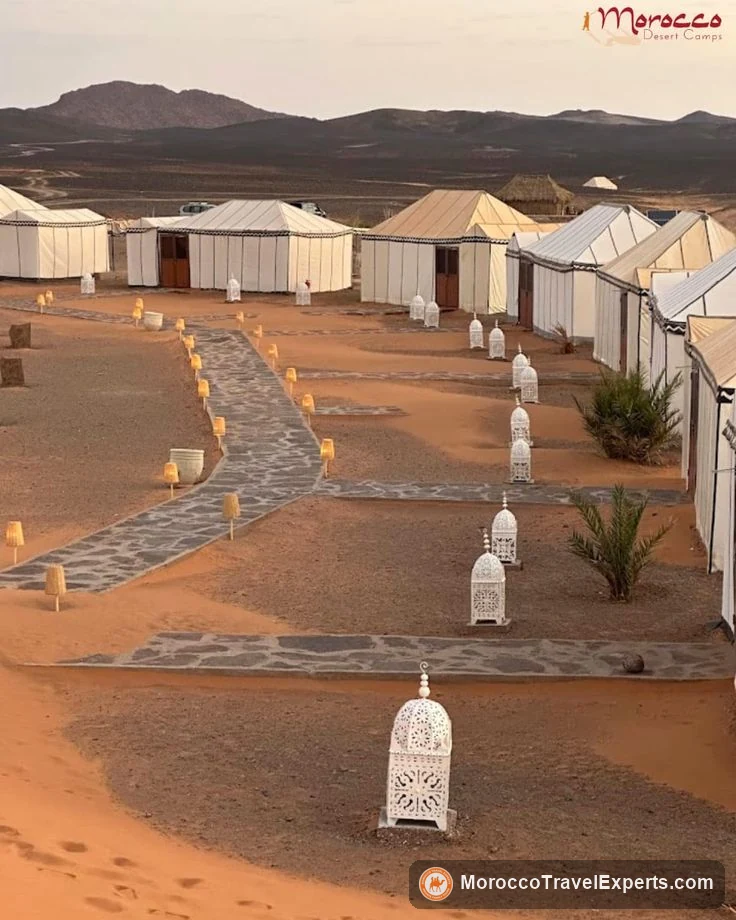
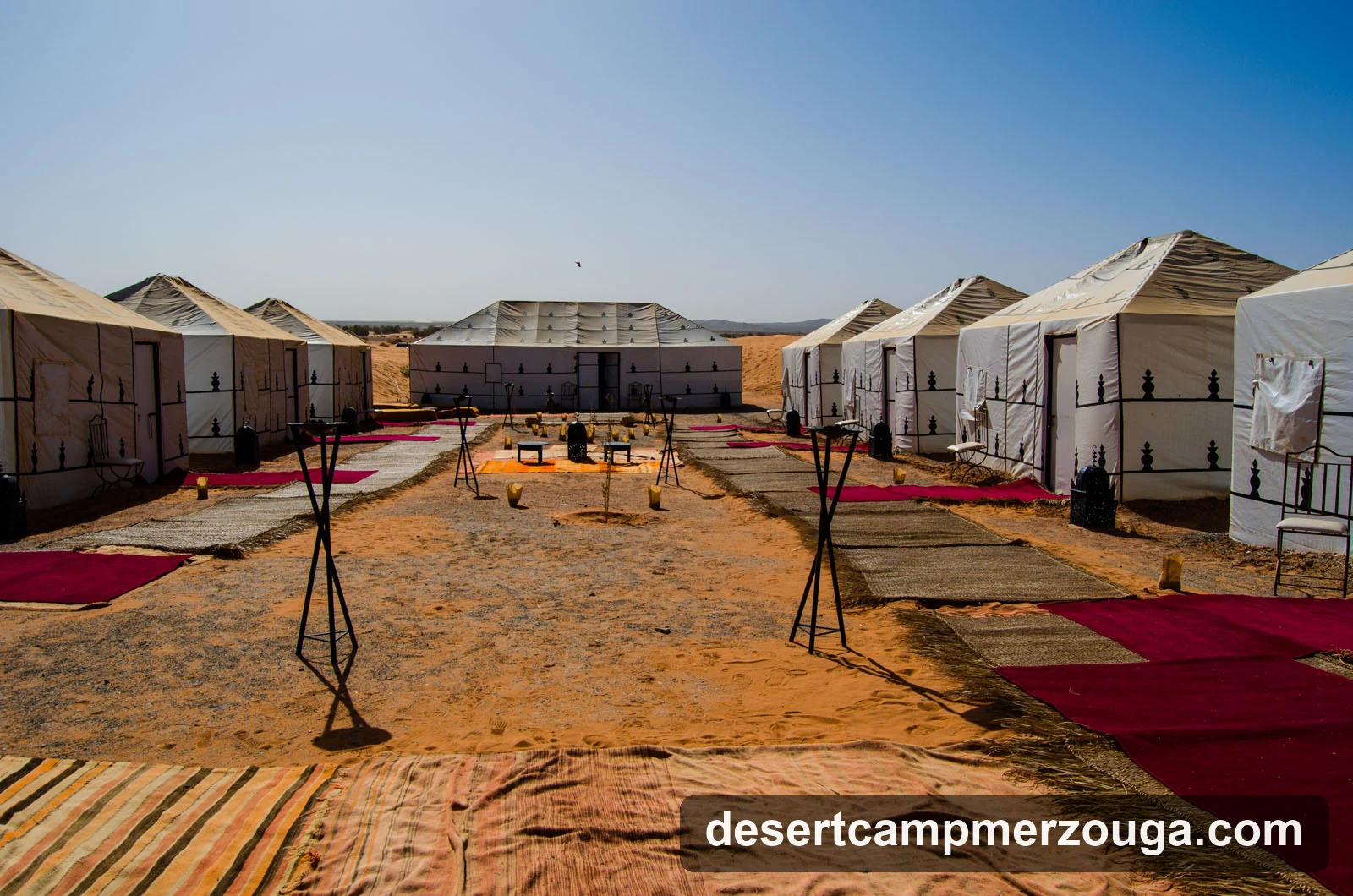
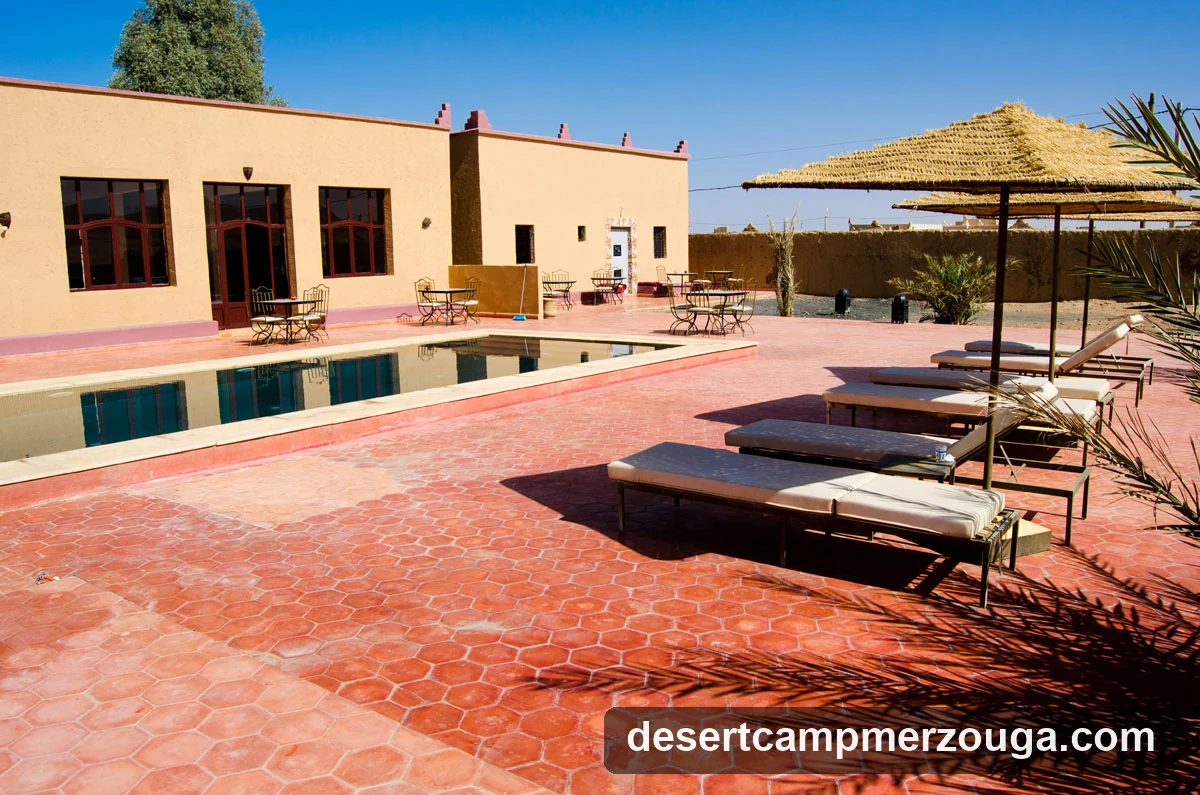
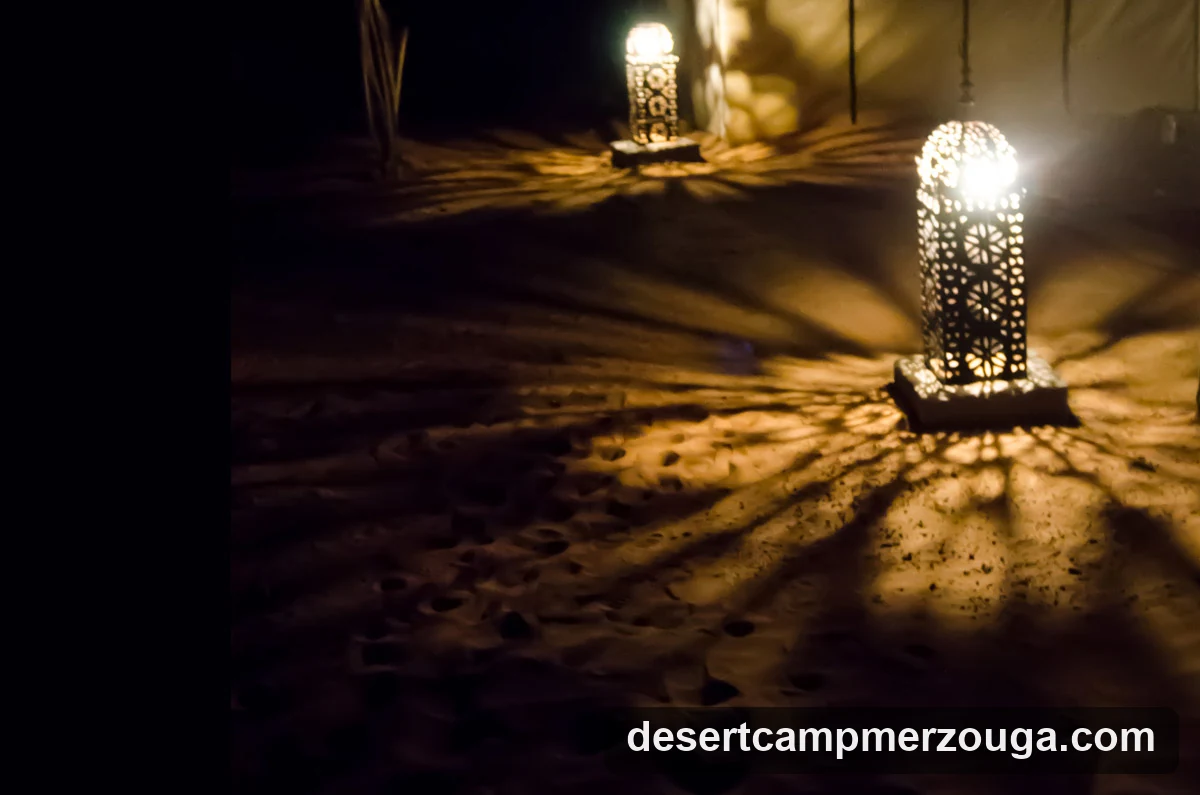
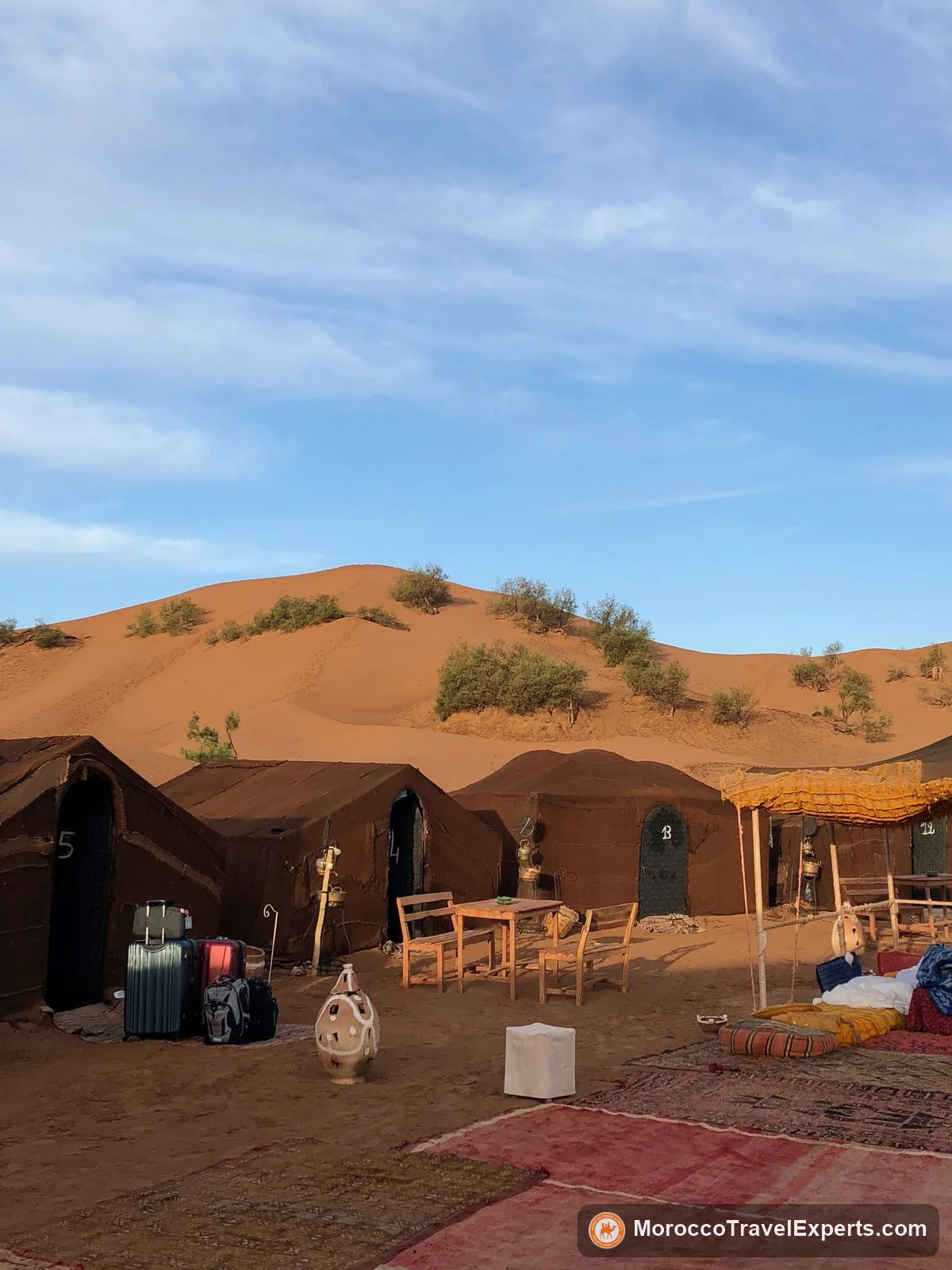
a few of the camps we work with directly. ranges from comfortable to genuinely luxurious.
kasbah hotels in the village
useful if you are arriving late, leaving early, or just need a hot shower and wifi for a night before camping. most are simple, well-kept, with a pool and a view of the dunes. they are also a good fallback for families who decide the kids will not last a full night in the sand.
how to get to merzouga (the routes that actually make sense)
from marrakech (the classic route)
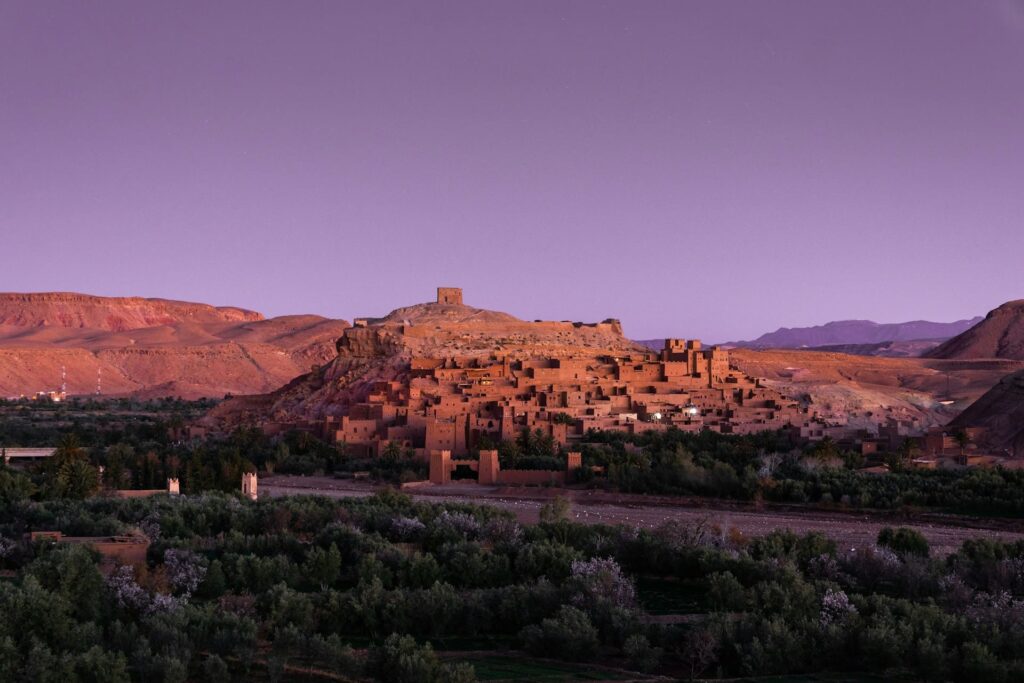
this is what most people do. it is a two-day drive across some of the most beautiful country in morocco. day one: marrakech, over the tizi n’tichka pass at 2,260 meters, through ait benhaddou (a unesco world heritage site), past ouarzazate, into the dades or todra gorge for the night. day two: through the rose valley, over to merzouga in the afternoon. total drive time roughly 8 to 9 hours spread across two days.
this route is what most of our 6-day morocco desert tour and the slower 6-day desert journey from marrakech are built around.
from fes
about 470 kilometers, 7 to 8 hours direct, but no one drives it direct. you stop in midelt for lunch, ifrane for the cedar forest and barbary macaques, and you arrive at merzouga in the late afternoon. one full day on the road, comfortable pace. our 3-day premium fes to marrakech sahara experience uses this approach.
by plane (fastest option)
errachidia airport is the nearest. from there it is about 1.5 hours by road to merzouga. flights are limited, mostly from casablanca. useful if you are short on time but you miss the entire point of the drive south. i rarely recommend it unless someone is on a tight schedule.
from agadir or the south
doable but a longer push, usually combined with a coastal segment. see our 6-day desert tour from agadir for one approach.
our private tours that include the merzouga desert
everything we run is private and tailor-made. the itineraries below are starting points. we adjust them constantly based on your group, your pace, and what your kids can handle. all run with our own licensed guides and drivers.
- 6-day morocco desert tour: the most popular route. marrakech to merzouga and back via the south.
- family sahara adventure 4-day: designed for families, including a luxury camp night.
- sahara sands and kasbahs 4-day: heavier focus on the kasbahs along the road south.
- premium 3-day fes to marrakech via the sahara: for travelers tight on time who still want a proper desert night.
- morocco desert and atlas explorer 4 days: combines the high atlas with the dunes.
- 6-day calm journey from marrakech: slower pace, more downtime, ideal for older travelers and families with younger kids.
not sure which route fits you? request a custom itinerary and we will build one. or just write to me directly and we can talk it through.
if you are still deciding between the two main moroccan desert options, our team wrote a full comparison: agafay desert vs merzouga for families. agafay is closer to marrakech and rockier. merzouga is the real sahara.
frequently asked questions about merzouga
where exactly is merzouga in morocco?
merzouga is a small village in southeastern morocco, about 50 kilometers south of erfoud, very close to the algerian border. it sits at the western edge of the erg chebbi dunes in the drâa-tafilalet region.
how do you get to merzouga from marrakech?
the classic route is a two-day drive over the tizi n’tichka pass, through ait benhaddou and ouarzazate, with an overnight in dades or todra gorge, then on to merzouga the next day. roughly 560 kilometers spread across two days. flying into errachidia airport and driving 1.5 hours south is the fastest option.
when is the best time to visit the merzouga desert?
october to mid-april is the comfortable window. summer can hit 45 to 50°c and is rough for kids and older travelers. spring and autumn are the best months overall.
how cold does it get at night in merzouga?
winter nights from december to february can drop to 2 to 5°c. autumn and spring nights are typically 10 to 15°c. summer nights are warm. always pack layers.
can kids do a camel trek?
yes, with caveats. kids from about 6 years old usually handle a short trek without trouble. younger children can ride double with a parent or take the 4×4 to camp instead. we discuss this with every family.
how many days should i spend in the merzouga desert?
minimum one night at a desert camp inside the dunes. two nights is much better. it lets you do both a proper sunset and sunrise from the high dunes, a 4×4 day, and time at a berber village without rushing.
is merzouga safe?
yes. crime is very rare in this part of morocco. the main risks are heat, dehydration, and twisted ankles in the sand. go with a licensed guide, follow basic desert safety, you will be fine.
do i need a 4×4 to get there?
no. the road to merzouga village is fully paved. you only need a 4×4 to go from the village into the deep dunes. all our tours include a proper 4×4 with a local driver for that portion.
a closing note
most articles about merzouga were written by someone who flew in for two nights and flew out. that is fine. but it means a lot of what you read online about this place is technically correct and emotionally wrong. the merzouga people remember is not the camel ride. it is the moment they stopped at the top of a dune at 5:50am and realized they had not had a thought in five minutes. you cannot put that in a brochure.
if you want to come, we can build the trip around you. families, couples, photographers, retired travelers, honeymooners. private cars, licensed guides, real berber camps, no nonsense.
plan your trip with us · request a custom itinerary · contact hamid directly