

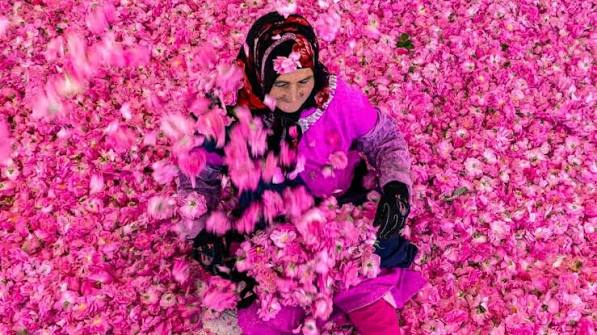
For a few precious weeks each spring, a quiet corner of southern Morocco turns pink.
Fresh roses appear along village paths, their fragrance drifts through the fields, and local families begin gathering blossoms early in the morning. This is rose season in Morocco a beautiful period centered around Kelaat M’Gouna and the famous Valley of Roses.
Located between Ouarzazate and the Dadès Valley, the region makes a memorable stop on a journey from Marrakech toward the Sahara. Travelers can explore traditional villages, meet local producers, shop for genuine rose products, and, if their dates align, experience the colorful Kelaat M’Gouna Rose Festival.
Because the blooming period is short and accommodation fills quickly around the festival, planning ahead is important. Our team can create a custom Morocco itinerary built around the harvest, the festival, and your wider journey through southern Morocco.
When Is Rose Season in Morocco?
Rose season in Morocco usually takes place from late April through May. The exact timing changes slightly each year because flowering depends on winter rainfall, spring temperatures, and local growing conditions.
Harvesting generally happens early in the morning, when the blossoms are fresh and their fragrance is strongest. Families and seasonal workers carefully collect the flowers before they are transported to local cooperatives and distilleries.
If seeing roses in bloom is your priority, the first half of May is normally a useful period to consider. However, nature does not follow a fixed calendar, so flexibility is valuable.
The annual festival is also held around the harvest period, but its exact dates are announced separately each year. Travelers should confirm the official program before booking non-refundable flights or accommodation.
Where Is Morocco’s Valley of Roses?
The Valley of Roses lies around Kelaat M’Gouna in Tinghir Province, within Morocco’s Drâa-Tafilalet region. It forms part of the scenic southern route connecting Marrakech, Ouarzazate, Skoura, the Dadès Valley, Tinghir, and the Sahara Desert.
Despite its name, the valley is not covered by endless commercial rose fields. Roses traditionally grow in hedges around irrigated plots, family farms, villages, and old kasbahs. These thorny hedges can help mark property boundaries while protecting other crops.
The combination of pink blossoms, green agricultural land, red-earth villages, and distant mountains makes the region particularly photogenic in spring.
According to the Moroccan National Tourist Office’s Ouarzazate guide, the region is especially known for the fragrant Damask rose, or Rosa damascena. Its petals are transformed into rosewater, essential oil, soaps, creams, perfumes, and other products.
What Is the Kelaat M’Gouna Rose Festival?
The Kelaat M’Gouna Rose Festival also known as the Festival of Roses or Rose Moussem celebrates the end of the annual harvest and the cultural importance of the flower.
For several days, Kelaat M’Gouna becomes one of southern Morocco’s liveliest destinations. The program may include:
- Traditional Amazigh music and dance
- A colorful street parade
- Exhibitions by rose growers and cooperatives
- Regional crafts and agricultural products
- Cultural performances and celebrations
- The election and crowning of the Rose Queen
- Workshops and professional events related to rose production
The atmosphere is festive, social, and proudly local. It is not simply a flower show: it is a celebration of the communities whose work has shaped the identity and economy of the valley.
The Moroccan National Tourist Office describes the festival as a celebration marking the end of the harvest, with dancing, Amazigh singing, local food, and community events.
Festival dates can change from one year to the next. Check announcements from the organizers or the Provincial Tourism Council of Tinghir before finalizing your trip.
What to Do During Rose Season
Walk through the rose-growing villages
The countryside beyond central Kelaat M’Gouna offers a quieter experience than the festival itself. A local walk can take you past rose hedges, cultivated fields, adobe villages, and kasbah landscapes.
Visitors should remember that these are working farms rather than staged attractions. Ask permission before entering private land or photographing people at work.
Visit a cooperative or distillery
A cooperative visit offers insight into how fresh petals become rosewater and other products. During harvest season, you may see blossoms being sorted before distillation.
These visits also help travelers understand how rose cultivation supports local households particularly women involved in harvesting, processing, and cooperative work.
Shop for authentic rose products
Kelaat M’Gouna is filled with shops selling rosewater, creams, soaps, oils, and perfumes. Quality can vary, so purchase from a reputable cooperative or producer and check the ingredients carefully.
Authentic distilled rosewater should not simply be water mixed with artificial fragrance. If you are buying rose essential oil, expect a small bottle and a significantly higher price because producing concentrated oil requires a large quantity of petals.
Explore the Dadès Valley
Rose season pairs naturally with the dramatic landscapes of the Dadès Valley. Travelers can continue toward Boumalne Dadès, visit traditional villages, photograph unusual rock formations, and explore the famous winding road through the Dadès Gorges.
Our 6-day Morocco tour from Marrakech already travels through Ouarzazate and the Dadès Valley and can be adapted around seasonal interests and available time.
Continue toward the Sahara
The Valley of Roses sits naturally on the route between Marrakech and Merzouga. This makes it possible to combine spring flowers, kasbahs, mountain scenery, desert landscapes, and a Sahara camp in one journey.
Travelers who prefer a more relaxed pace can consider our 8-day private tour from Marrakech, with a personalized stop in or around Kelaat M’Gouna.
How Many Days Should You Spend in the Valley of Roses?
One night can work for travelers following a longer road trip, but two nights provide a more rewarding experience during rose season.
With two nights, you can:
- Explore the surrounding villages without rushing
- Visit a cooperative or distillery
- Take a guided countryside walk
- Attend part of the festival, when dates coincide
- Continue comfortably toward the Dadès Gorges or Sahara
During the festival, traffic becomes busier and accommodation is in high demand. Building extra time into the itinerary helps avoid turning a cultural experience into a rushed roadside stop.
Browse our private Morocco tours for ideas, or ask us to adjust a route around your travel dates.
How to Reach Kelaat M’Gouna
Many international travelers reach the Valley of Roses as part of a private journey from Marrakech.
The classic route crosses the High Atlas Mountains before passing Aït Benhaddou, Ouarzazate, and Skoura. Kelaat M’Gouna can then be combined with the Dadès Valley, Todra Gorge, and the dunes near Merzouga.
Although the distance may look manageable on a map, this is a scenic mountain and desert route with many worthwhile stops. A private driver makes the journey easier and allows the schedule to adapt to road conditions, photography stops, and the needs of your group.
See our selection of private tours departing from Marrakech if you would like to combine the Valley of Roses with the Atlas Mountains and Sahara.
Practical Tips for Visiting During Rose Season
Reserve early
Spring is already one of Morocco’s most popular travel periods. Rooms around Kelaat M’Gouna and the Dadès Valley can sell out quickly during the festival.
Pack for changing temperatures
Expect pleasant spring days, but bring layers for cooler mornings and evenings. Comfortable walking shoes, sun protection, and a reusable water bottle are useful.
Carry some cash
Cooperatives, small shops, market stalls, and rural businesses may not accept international cards. Moroccan dirhams in small denominations are helpful.
Start early
Morning is the best time to experience harvest activity, softer light, and cooler temperatures. Festival areas also tend to become busier later in the day.
Confirm festival dates
Do not assume that the celebration takes place on the same weekend every year. Wait for an official announcement before organizing your entire trip around a specific date.
Travel respectfully
Always request permission before photographing harvesters or entering agricultural land. Choosing locally produced goods and community-based experiences helps keep more tourism income within the valley.
Is Rose Season Worth Adding to a Morocco Trip?
Yes especially for travelers interested in culture, rural life, photography, local products, and experiences tied to the seasons.
The Valley of Roses offers a softer contrast to Morocco’s imperial cities and desert landscapes. It also gives visitors an opportunity to experience a living agricultural tradition rather than a place created only for tourism.
Even if your dates do not match the main festival, the wider region remains worth visiting for its villages, kasbahs, walking routes, cooperatives, and access to the Dadès Valley.
Frequently Asked Questions
What month is rose season in Morocco?
The rose harvest generally takes place from late April through May, with timing influenced by weather and local conditions. May is the month most closely associated with the harvest and festival.
Where is the Rose Festival held in Morocco?
The festival takes place in Kelaat M’Gouna, in Tinghir Province in southeastern Morocco. The town lies between Ouarzazate and the Dadès Valley.
Are the festival dates the same every year?
No. The event is usually organized around the spring harvest, but exact dates can change. Always check the current official program before booking.
What type of rose grows in the Valley of Roses?
The area is famous for the Damask rose, known botanically as Rosa damascena. Its fragrant petals are used to produce rosewater, essential oil, cosmetics, soaps, and perfumes.
Can I combine the Valley of Roses with the Sahara?
Yes. Kelaat M’Gouna is located along the popular southern route from Marrakech and Ouarzazate toward the Dadès Valley, Todra Gorge, and Merzouga.
Is the Rose Festival suitable for families?
Yes, but families should prepare for crowds, music, traffic, and busy public spaces. Private transport, pre-booked accommodation, and a flexible schedule make the experience more comfortable.
Plan Your Rose-Season Journey with Local Experts
The best rose-season itinerary depends on the bloom, festival dates, accommodation availability, and how much of southern Morocco you want to explore.
Morocco Travel Experts can arrange your private driver, accommodations, local experiences, festival visit, Dadès Valley stops, and onward journey to the Sahara. Explore our trip-planning and booking services or contact our local team to start creating your journey.
Tell us your travel dates and interests, and we will design a private Morocco itinerary around the landscapes and experiences you want to see.