
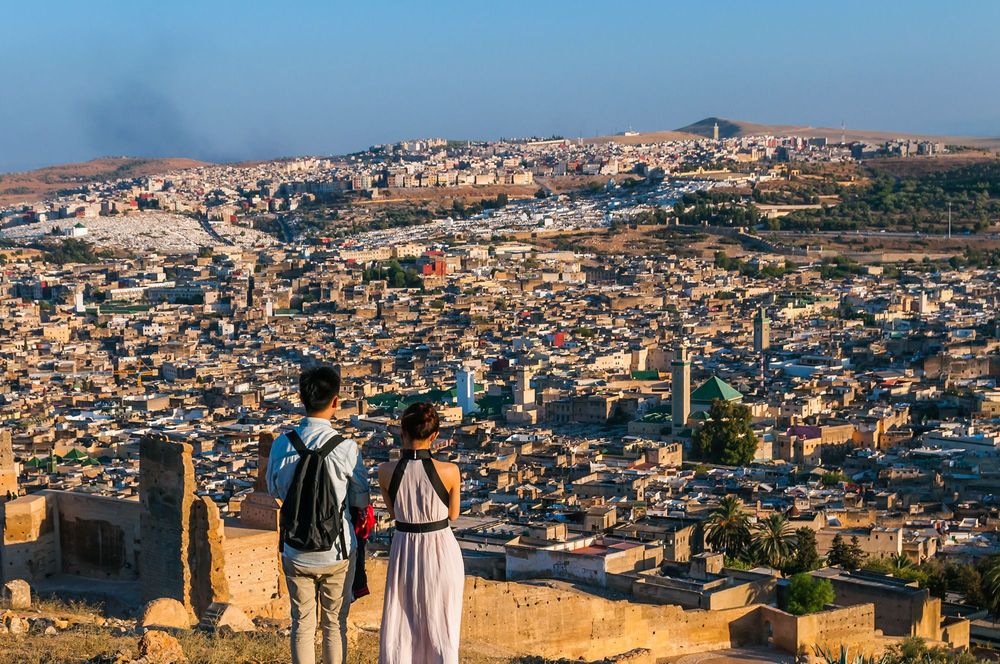
Fes (also spelled Fez), Morocco’s oldest imperial city and spiritual heart, is home to the world’s largest car-free medieval medina, the legendary Chouara Tannery, and Al Quaraouiyine University—the oldest continuously operating university in the world founded in 859 AD. This UNESCO World Heritage city of fes morocco offers an authentic Moroccan experience with its labyrinthine fes medina (Fes el-Bali) containing over 9,000 winding alleyways, magnificent Islamic architecture including the Bou Inania Madrasa and Al Attarine Madrasa, traditional artisan souks producing world-famous leather goods and ceramics, and the iconic Blue Gate (Bab Boujloud) entrance. The fes weather features hot summers and mild winters, with the best time to visit being spring (March-May) and fall (September-November). Things to do in fes range from exploring the ancient fes el bali and visiting the colorful tanneries where leather has been dyed using traditional methods for centuries, to discovering hidden riads, experiencing authentic Moroccan cuisine, relaxing at traditional hammams, and taking day trips to nearby Volubilis Roman ruins, Meknes, and the blue city of Chefchaouen. Whether staying in a traditional riad fes within the medina walls or a modern hotel in the Ville Nouvelle, Fes provides an immersive journey into Morocco’s rich history, Islamic scholarship, and artisanal heritage perfect for culture enthusiasts, history lovers, and travelers seeking authentic Morocco.
Traveling from Fes to the Sahara Desert? Our 4-day family desert experience from Fes to Marrakech combines the cultural wonders of Fes with an unforgettable Sahara adventure!
Discovering Fes: Morocco’s Timeless Cultural Capital
Welcome to fes morocco, where stepping through the ancient Blue Gate feels like traveling back a thousand years. Unlike the tourist-oriented atmosphere of Marrakech, Fes remains remarkably authentic—a living medieval city where locals still live, work, and carry on centuries-old traditions within the medina walls. The city of fes served as Morocco’s capital for over 400 years and remains the country’s spiritual and cultural heartbeat.
Founded in 789 AD by Idris I and later expanded by his son Idris II, Fes became a refuge for families fleeing persecution from Andalusia (Spain) and Kairouan (Tunisia) in the 9th century. These waves of migration brought sophisticated artisans, scholars, and merchants who transformed Fes into one of the medieval world’s great centers of learning, culture, and commerce. Today, the fes medina stands as the world’s best-preserved medieval Arab city, offering visitors an unparalleled glimpse into North African Islamic civilization.
The Fes Medina: World’s Largest Car-Free Medieval City
Fes el-Bali (Old Fes)
The fes el bali, or Old Fes, is the heart and soul of the city. This UNESCO World Heritage Site encompasses over 9,000 narrow alleyways, steep passageways, and hidden squares within its 15th-century walls. With approximately 300,000 inhabitants living within the medina, this is no museum piece—it’s a vibrant, working city where donkeys and handcarts remain the primary means of transporting goods through streets too narrow for vehicles.
Getting lost in the medina of fes isn’t just likely—it’s inevitable and part of the experience. The maze-like layout follows no apparent grid system, with alleys branching, dead-ending, and doubling back unpredictably. The sensory overload is extraordinary: the calls of shopkeepers, the clip-clop of donkey hooves, the aroma of spices and cedar wood, the sight of artisans hammering copper or weaving silk. This is fes morocco at its most authentic.
Bab Boujloud – The Blue Gate
The Blue Gate Fes (Bab Boujloud) serves as the main entrance to Fes el-Bali and has become the city’s most photographed landmark. Built in 1913 during the French protectorate, this relatively modern gate features stunning blue ceramic tiles on the exterior facing the new city and green tiles on the interior facing the old medina. The blue represents Fes while green symbolizes Islam.
Just beyond the Blue Gate, the main thoroughfare Talaa Kebira (“the big climb”) descends into the medina, lined with shops, restaurants, and cafés. This is where most visitors begin their fes medina adventure. The nearby Bou Jeloud Gardens offer a peaceful green space perfect for taking a break before plunging into the medina’s bustling alleyways.
Essential Fes Attractions and Landmarks
The Magnificent Madrasas
Bou Inania Madrasa
The Bou Inania Madrasa, built between 1350-1357 by Sultan Abu Inan Faris, represents the pinnacle of Marinid architecture. This Islamic school is considered the most beautiful example of Moroccan religious architecture, featuring exquisite zellige (mosaic tilework), intricate carved plaster, stunning cedar wood carvings, and a magnificent marble courtyard. Unlike most mosques in Morocco, the Bou Inania Madrasa welcomes non-Muslim visitors, making it an essential stop on any fes travel guide.
The madrasa also functioned as a mosque—the only one in Fes with a minaret that’s also a theological college. Don’t miss the beautiful water clock on the building’s exterior, though its precise original function remains a mystery to scholars.
Al Attarine Madrasa
Built in 1323, the Al Attarine Madrasa sits near the spice souk (hence its name, “the perfumers”). This 14th-century theological school showcases extraordinary craftsmanship in its tilework, carved cedar, and ornate stucco decorations. Smaller than Bou Inania but equally impressive in detail, every surface displays masterful Moroccan artistry. The rooftop offers excellent views over the surrounding medina.
Al Quaraouiyine Mosque and University
Founded in 859 AD by Fatima al-Fihri, Al Quaraouiyine holds the Guinness World Record as the oldest continuously operating university in the world. This institution educated scholars who influenced Islamic civilization for centuries, teaching theology, law, mathematics, astronomy, medicine, and philosophy. While the mosque itself is closed to non-Muslims, you can peek through the massive doors and visit the recently restored Al Quaraouiyine Library, one of the world’s oldest libraries containing priceless manuscripts.
The Famous Fes Tanneries
Chouara Tannery
The Chouara Tannery represents one of the most iconic images of fes morocco—hundreds of circular stone vessels filled with vibrant dyes creating a patchwork of colors visible from surrounding leather shops’ rooftop terraces. Dating back to the 11th century, this is the oldest and largest of Fes’s three tanneries and one of the oldest leather tanneries in the world.
The tanning process remains virtually unchanged from medieval times. Workers use a mixture of cow urine, pigeon feces, quicklime, and salt to soften the hides before dyeing them with natural pigments—saffron for yellow, indigo for blue, mint for green, and poppy for red. The smell is overwhelmingly pungent, so accept the mint sprigs offered by leather shop owners (though tipping is usually expected afterward, or bring your own).
The best views come from leather shops surrounding the tannery. Visit in the morning when workers are most active. While the tannery itself is technically free to view, you’ll need to enter through a leather shop, where staff will guide you to a terrace and likely encourage you to buy their products. A small tip (20-50 dirhams) for the viewing privilege is customary if you don’t purchase anything.
Other Tanneries
Sidi Moussa Tannery offers a less touristy alternative to Chouara, with similar processes but fewer crowds. The tanneries showcase Fes’s enduring artisanal traditions and remain essential to understanding why fes morocco became famous for producing the world’s finest leather goods.
Museums and Cultural Sites
Nejjarine Museum of Wooden Arts & Crafts
Housed in a beautifully restored 18th-century foundouk (caravanserai), the Nejjarine Museum celebrates Morocco’s rich woodworking heritage. The building itself is architectural art, featuring a stunning courtyard and ornate details. Collections include antique doors, furniture, musical instruments, and carpentry tools. The rooftop café offers excellent medina views and a peaceful respite from the bustling streets below.
Dar Batha Museum
This former royal palace turned museum houses an impressive collection of traditional Moroccan arts and crafts, including ceramics, textiles, jewelry, woodwork, and the famous blue Fassi pottery. The beautiful Andalusian gardens provide a tranquil escape and showcase the palace’s 19th-century splendor.
Borj Nord (Arms Museum)
This 16th-century fortress perched on a hill overlooking Fes houses a fascinating weapons museum displaying centuries of Moroccan military history. The panoramic views of the medina from here are spectacular—perfect for understanding the vast scale of Fes el-Bali.
Royal Palace and Gardens
Royal Palace (Dar el-Makhzen)
While you cannot enter the Royal Palace (still used by the King), its massive golden doors—among the most photographed in Morocco—are worth visiting. The seven enormous brass doors are decorated with traditional Moroccan designs and showcase exceptional craftsmanship. The palace square offers good views and a sense of the building’s impressive scale.
Jnan Sbil Gardens
Just outside the medina walls near the Blue Gate, Jnan Sbil Gardens provide the medina’s only significant public green space. This peaceful park features water features, palm-lined walkways, exotic plants, and flowers. It’s perfect for escaping the medina’s intensity while watching locals relax, children play, and families picnic. Open Tuesday through Sunday from 8 AM to 7:30 PM.
Shopping in the Fes Souks
The souks of fes are organized by trade guilds, with entire neighborhoods dedicated to specific crafts—a medieval tradition still practiced today. Unlike Marrakech’s tourist-focused markets, Fes souks cater primarily to locals, offering higher quality goods and more authentic experiences.
Key Souk Areas
- Souk Attarine (Spice Souk): Pyramids of colorful spices, herbs, traditional cosmetics, and natural remedies
- Souk Haddadine: Metalworkers hammering brass and copper into traditional lamps, trays, and decorative items
- Souk Nejjarine: Carpenters creating beautiful cedar wood furniture and decorative pieces
- Souk Seffarine: Coppersmiths beating metal—the constant hammering creates a mesmerizing rhythm
- Leather Souks: Bags, belts, slippers, and jackets made from tannery-dyed leather
- Textile Souks: Carpets, fabrics, traditional clothing, and embroidered goods
- Ceramic Quarter: Beautiful Fassi pottery, particularly the distinctive blue and white ceramics
Shopping Tips:
- Bargaining is expected—start at 40-50% of the initial asking price
- Fes produces Morocco’s finest leather goods; quality here generally exceeds Marrakech
- Thursday and Friday mornings tend to be less crowded
- Don’t feel pressured—walking away often brings better prices
- Cash is preferred; many shops don’t accept cards
- Ask if shipping is available for larger purchases like carpets
Where to Stay: Best Hotels and Riads in Fes
Traditional Riads in the Medina
Staying in a riad fes within the medina offers the most authentic experience. These traditional Moroccan houses built around central courtyards provide peaceful sanctuaries from the medina’s bustling energy. Many feature rooftop terraces with stunning views, traditional Moroccan breakfasts, and personalized service.
Popular choices include Riad Fes, Palais Amani, Riad Laaroussa, Dar Roumana, and Karawan Riad. Most riads in fes can arrange guides, airport transfers, and cooking classes. Note that cars cannot enter the medina, so you’ll need to walk or arrange donkey/cart transport for luggage from nearby parking areas.
Luxury Hotels
For those seeking international hotel standards with Moroccan character, several excellent options exist:
- Palais Faraj Suites & Spa: Luxury boutique hotel on the medina’s edge with spectacular views
- Sahrai Hotel: Contemporary design hotel in the hills above Fes with panoramic city views
- Riad Fes – Relais & Châteaux: Upscale riad with spa, pool, and refined Moroccan elegance
- Marriott Jnan Palace: Modern resort-style property in gardens outside the medina
Ville Nouvelle (New City) Hotels
The modern Ville Nouvelle offers international chain hotels, easier parking, and more contemporary amenities. While less atmospheric than medina riads, these hotels provide convenience for those uncomfortable navigating the old city or requiring specific accessibility features. Popular options include Hotel Sahrai, Marriott Jnan Palace, and various mid-range chains.
Top Things to Do in Fes Morocco
Cultural and Culinary Experiences
Moroccan Cooking Classes
Learn to prepare traditional Moroccan dishes like tagine, couscous, pastilla, and harira soup. Most cooking classes include market tours where you’ll select fresh ingredients from medina vendors, learning about Moroccan spices and produce. Many riads fes offer in-house cooking classes, or you can book specialized culinary experiences.
Traditional Hammam Experience
Experience a traditional Moroccan bathhouse ritual involving steam rooms, exfoliation with black soap (savon beldi), and relaxing massage. Public neighborhood hammams offer authentic local experiences, while luxury riads and spas provide more private, upscale versions. This centuries-old cleansing tradition remains central to Moroccan culture.
Guided Medina Tours
While wandering independently has charm, a knowledgeable local guide brings the fes medina to life, explaining history, pointing out hidden architectural details, navigating to lesser-known workshops, and helping you understand the complex social fabric of medina life. Official guides can be hired through your accommodation or tourist offices.
Food Tours
Foodie tours through the medina introduce you to street food stalls, traditional restaurants, sweet shops, and local bakeries where residents bring dough to be baked in communal ovens. Taste specialties like sfenj (Moroccan donuts), msemen (flaky pancakes), b’ssara (fava bean soup), and traditional sweets.
Day Trips from Fes
Volubilis Roman Ruins
About 90 minutes from Fes, Volubilis preserves Morocco’s most impressive Roman ruins. This UNESCO World Heritage site features remarkably intact mosaics, triumphal arches, and the remains of a once-prosperous Roman city. The site offers fascinating insight into North Africa’s Roman period (3rd century BC to 3rd century AD).
Meknes – Imperial City
Just 60 kilometers from Fes, Meknes is another of Morocco’s four imperial cities. Smaller and less touristy than Fes, Meknes boasts its own impressive medina, the massive Bab Mansour gate (considered Morocco’s most beautiful), the Mausoleum of Moulay Ismail, and underground grain storage chambers. Many visitors combine Meknes with Volubilis in a single day trip.
Chefchaouen – The Blue Pearl
The famous blue city of Chefchaouen sits about 3 hours from Fes in the Rif Mountains. While possible as a day trip, the journey is long—consider an overnight stay to fully appreciate this magical town’s blue-washed buildings, mountain setting, and relaxed atmosphere. CTM and other bus companies operate regular services, or hire a private driver for more flexibility.
Middle Atlas Mountains
Explore the cedar forests of Azrou and Ifrane (often called “Morocco’s Switzerland” for its Alpine-style architecture). Visit Azrou’s monkey forest where Barbary macaques roam freely, see traditional carpet-weaving cooperatives, and enjoy cooler mountain air. These mountain towns offer striking contrasts to desert and medina landscapes.
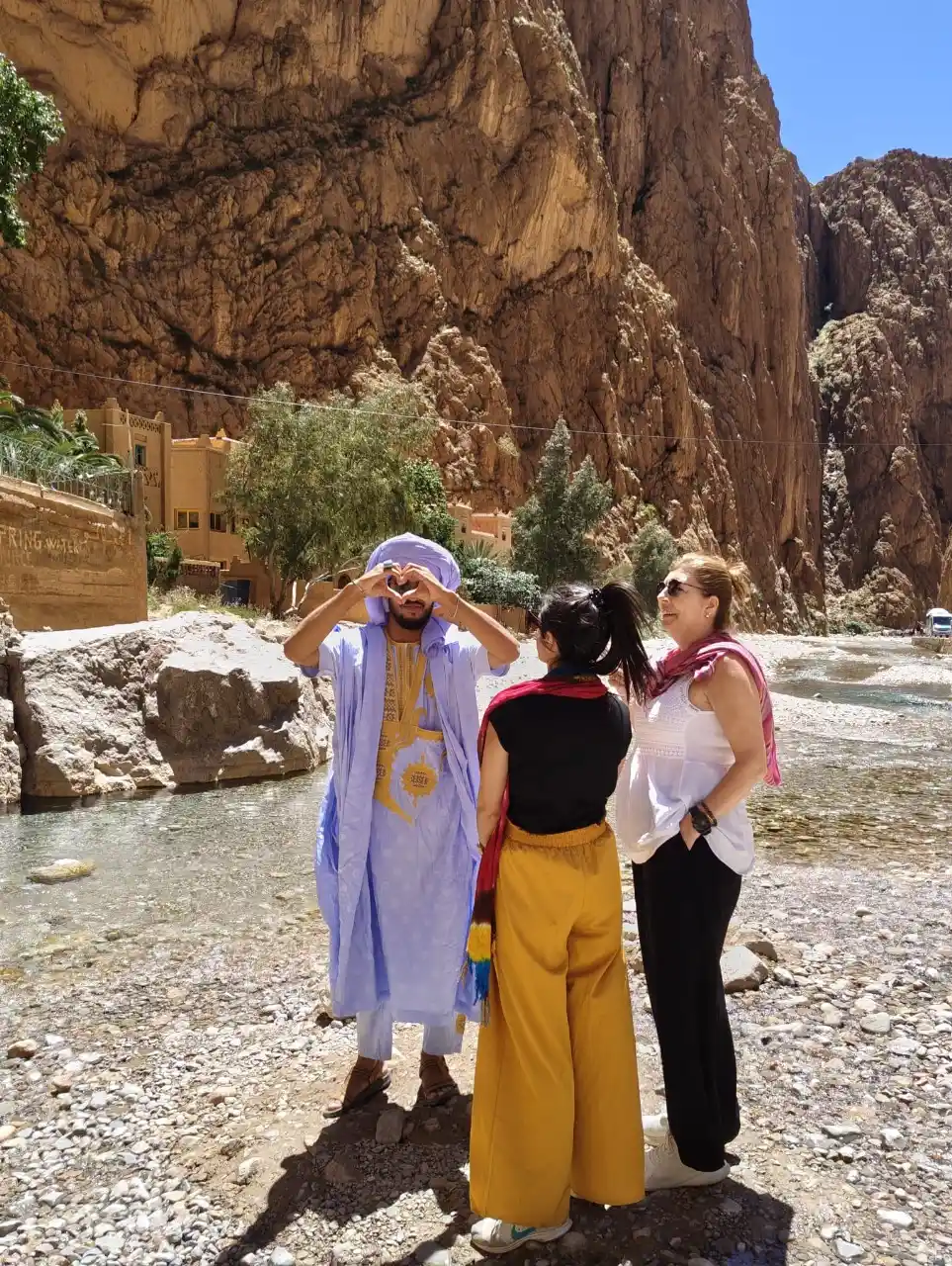
Ready for a desert adventure? Our 4-day family desert experience from Fes to Marrakech includes the Sahara, Todra Gorge, and Atlas Mountains!
Practical Travel Information for Fes
Getting to Fes
Fes-Saïss Airport
Fes-Saïss Airport (airport code: FEZ) is located about 15 kilometers from the city center. The airport receives direct flights from major European cities including Paris, Brussels, Madrid, London, Amsterdam, Milan, and Frankfurt, plus domestic flights from Casablanca. Taxis from the airport to the medina cost approximately 150-200 dirhams (€15-20), while airport buses offer cheaper alternatives.
Train to Fes
ONCF (Morocco’s national railway) operates comfortable trains connecting Fes with Casablanca (4 hours), Rabat (3 hours), Tangier (5 hours via Meknes), and Marrakech (7+ hours). The train station is located in the Ville Nouvelle, about 10-15 minutes by taxi from the medina. First-class cars offer air conditioning and reserved seating.
Bus Services
CTM and Supratours operate bus services from the main bus station near Bab Boujloud. CTM offers Morocco’s most reliable bus service with comfortable coaches. Book tickets in advance for popular routes like Chefchaouen, which often sell out. The bus station can be chaotic, so arrive early.
Getting Around Fes
Transportation Options:
- Walking: The medina is entirely pedestrian—the only way to explore it
- Petit Taxis: Small red taxis metered for trips within Fes (3-4 passengers maximum)
- Grand Taxis: Larger shared taxis for longer journeys or groups (typically to nearby cities)
- Guides: Official guides wear badges; agree on prices before starting tours
- Apps: Careem (ride-sharing) works in Fes but has limited coverage
Medina Navigation Tips:
- Download offline maps (Maps.me works well)
- Wear comfortable walking shoes—streets are steep and cobblestoned
- Alleys are narrow; donkeys have right of way—flatten against walls when they pass
- Learn key landmarks: Blue Gate, Kairaouine Mosque, tanneries, major squares
- Getting lost is normal—locals are generally helpful with directions
- Don’t be afraid to politely decline unsolicited guide offers
Fes Weather and Best Time to Visit
The fes morocco weather experiences four distinct seasons:
Spring (March-May)
Temperatures: 15-28°C (59-82°F). Perfect weather with blooming gardens, comfortable temperatures for medina exploration, and fewer crowds than summer. This is the ideal time to visit fes morocco.
Summer (June-August)
Temperatures: 20-37°C (68-99°F). Very hot, especially in July and August when temperatures can exceed 40°C (104°F). The medina’s narrow streets offer some shade, but bring plenty of water and sunscreen. Tourist numbers drop due to heat.
Fall (September-November)
Temperatures: 16-29°C (61-84°F). Excellent visiting conditions similar to spring. September can still be warm, but October and November are perfect for comfortable sightseeing.
Winter (December-February)
Temperatures: 6-17°C (43-63°F). Cool and sometimes rainy. Nights can be cold, especially in unheated riads. Pack layers and warm clothing. Fewer tourists mean better prices and emptier sites.
Best months to visit: April, May, September, and October offer the perfect combination of pleasant weather and manageable crowds.
Fes Restaurants and Traditional Cuisine
Fes cuisine is considered among Morocco’s finest, known for refined flavors and sophisticated preparation. The city’s culinary traditions evolved in royal kitchens and wealthy households, creating dishes that showcase Morocco’s Arab-Andalusian heritage.
Must-Try Fassi Dishes:
- Pastilla (B’stilla): The signature Fes dish—sweet-savory pie with pigeon or chicken, almonds, eggs, and cinnamon in flaky pastry
- Tagine Tfaya: Lamb with caramelized onions, raisins, and almonds
- Couscous: Traditionally served Fridays, often with seven vegetables
- Harira: Rich soup with tomatoes, lentils, chickpeas, and lamb—traditional for breaking Ramadan fast
- Mechoui: Slow-roasted whole lamb
- Chebakia: Sesame cookies fried and soaked in honey
- Briouat: Triangular pastries filled with almonds or meat
- Mint Tea: Morocco’s national drink, served with ceremony
Recommended Restaurants in Fes:
- Dar Roumana: Upscale dining in a beautiful riad setting with creative Moroccan cuisine
- Café Clock: Popular expat-friendly café famous for camel burgers and cultural events
- L’Ambre at Palais Faraj: Fine dining with panoramic medina views
- The Ruined Garden: Charming restaurant in a restored garden with fresh, seasonal dishes
- Chez Rachid: Local favorite for traditional Fassi cuisine
- Thami’s: Family-run restaurant serving authentic home cooking
- Street food near Blue Gate: Grilled meats, fresh orange juice, snails, and traditional snacks
History and Culture of Fes
Understanding Fes’s history enriches every medina visit. Founded in 789 AD by Idris I (founder of Morocco’s first Arab dynasty), the city grew dramatically when his son Idris II established it as the capital in 809 AD.
Key Historical Periods:
- 789 AD: Foundation by Idris I
- 809 AD: Idris II makes Fes the capital
- 9th century: Waves of refugees from Andalusia and Tunisia bring sophistication
- 859 AD: Fatima al-Fihri founds Al Quaraouiyine University
- 11th-13th centuries: Golden age under Almoravid and Almohad dynasties
- 14th century: Marinid dynasty creates architectural masterpieces
- 1912-1956: French Protectorate—Ville Nouvelle built
- 1981: UNESCO World Heritage designation
Cultural and Intellectual Heritage
Fes served as a major intellectual and cultural center of the Islamic world for over a millennium. Al Quaraouiyine University attracted scholars from across the Mediterranean and Islamic worlds, teaching mathematics, astronomy, philosophy, medicine, and Islamic law. Notable alumni include the philosopher Averroes (Ibn Rushd), the historian Ibn Khaldun, and the Jewish philosopher Maimonides.
The city’s artisanal traditions—leather working, pottery, metalwork, woodcarving, and embroidery—have been passed down through generations in family workshops. These crafts aren’t museum pieces but living traditions, with contemporary artisans using techniques largely unchanged for centuries.
Essential Tips for Visiting Fes
What to Pack:
- Very comfortable walking shoes (the medina involves lots of walking on uneven cobblestones)
- Modest clothing—shoulders and knees covered for religious sites
- Layers—temperature varies significantly between day/night and seasons
- Small backpack or crossbody bag (easier than shoulder bags in narrow streets)
- Sunscreen, hat, and sunglasses (strong North African sun)
- Hand sanitizer and tissues (public restrooms vary in quality)
- Offline maps downloaded to phone
- Scarf or mint for tannery visits
Cultural Etiquette:
- Dress conservatively, especially in the medina and religious areas
- Ask permission before photographing people (offer small tips if appropriate)
- Remove shoes when entering mosques (where permitted) and some shops
- Use right hand for eating and greetings (left hand considered unclean)
- Learn basic Arabic or French greetings—locals appreciate the effort
- Respect prayer times—mosques amplify calls to prayer five times daily
- During Ramadan, avoid eating/drinking publicly during daylight hours
Practical Tips:
- Money: ATMs widely available; carry cash for souks (many vendors don’t accept cards)
- Language: Arabic and French are primary languages; English less common than in Marrakech
- Guides: Unofficial guides can be persistent near Blue Gate; polite but firm refusal is fine
- Bargaining: Expected in souks; start at 40-50% of asking price
- Safety: Fes is very safe; watch for pickpockets in crowded areas
- Time needed: Minimum 2 full days; 3-4 days ideal for thorough exploration
- Photography: The medina is incredibly photogenic but respect privacy
Why Fes Should Be on Every Morocco Itinerary
Fes morocco offers what many travelers seek but struggle to find in our modern world—authentic connection to the past. While Marrakech has evolved into Morocco’s primary tourist destination, Fes remains remarkably genuine. The fes medina isn’t a historical recreation but a living medieval city where daily life continues much as it has for centuries.
Walking through fes el bali’s labyrinthine alleys, you’re not observing history—you’re experiencing it. Artisans hammering copper in the same workshops their grandfathers used, bakers sliding bread into communal ovens, students hurrying to religious schools, donkeys navigating impossibly narrow passages—this is Morocco as it was, remarkably preserved yet vibrantly alive.
The sensory intensity of Fes—the sounds of hammering metal and calls to prayer, the smells of spices and leather tanneries, the sight of colorful ceramics and intricate tilework, the taste of refined Fassi cuisine—creates memories that endure long after you’ve left Morocco. This isn’t a city that’s been sanitized for tourism; it’s a city that invites you to experience authentic Moroccan culture on its own terms.
Whether you spend your days exploring magnificent madrasas, shopping in ancient souks, learning to cook tagine, or simply getting pleasantly lost in the medina’s maze, Fes rewards curious travelers with depth, authenticity, and beauty. This is Morocco’s cultural and spiritual heart, and it deserves a prominent place in any Moroccan journey.
Ready to Explore Fes and Beyond?
Experience the magic of Fes combined with Morocco’s other wonders:
- 4-Day Family Desert Experience from Fes to Marrakech – Perfect for families wanting to combine Fes’s culture with Sahara adventure
From the medieval medina to the golden dunes of the Sahara—let your Moroccan adventure begin in Fes!